


Nawras Soukhta speaks Swedish with an ease that catches me off guard. It is a flowing, unthinking fluency of someone who lives inside a language, the thoughts spilling out in a melodic rise and fall during unremarkable exchanges that no one notices, nor is supposed to. The greeting to a nurse that he passes in the hall, the joke to the receptionist about a scheduling mix-up, all of it moving without thought or hesitation or any sign that this was once foreign, that these rounded vowels and swaying lilt were shapes and rhythms he once had to learn to make.
He is 26 and solidly built with stubble darkening his jaw, a stethoscope slung around his neck, and there is a lightness to him, something buoyant in the way he moves through the hallways and offices and break room with its bad coffee and cluttered notice board, all of it absorbed into the rhythm of just another day here in Vimmerby, this small town in southern Sweden.
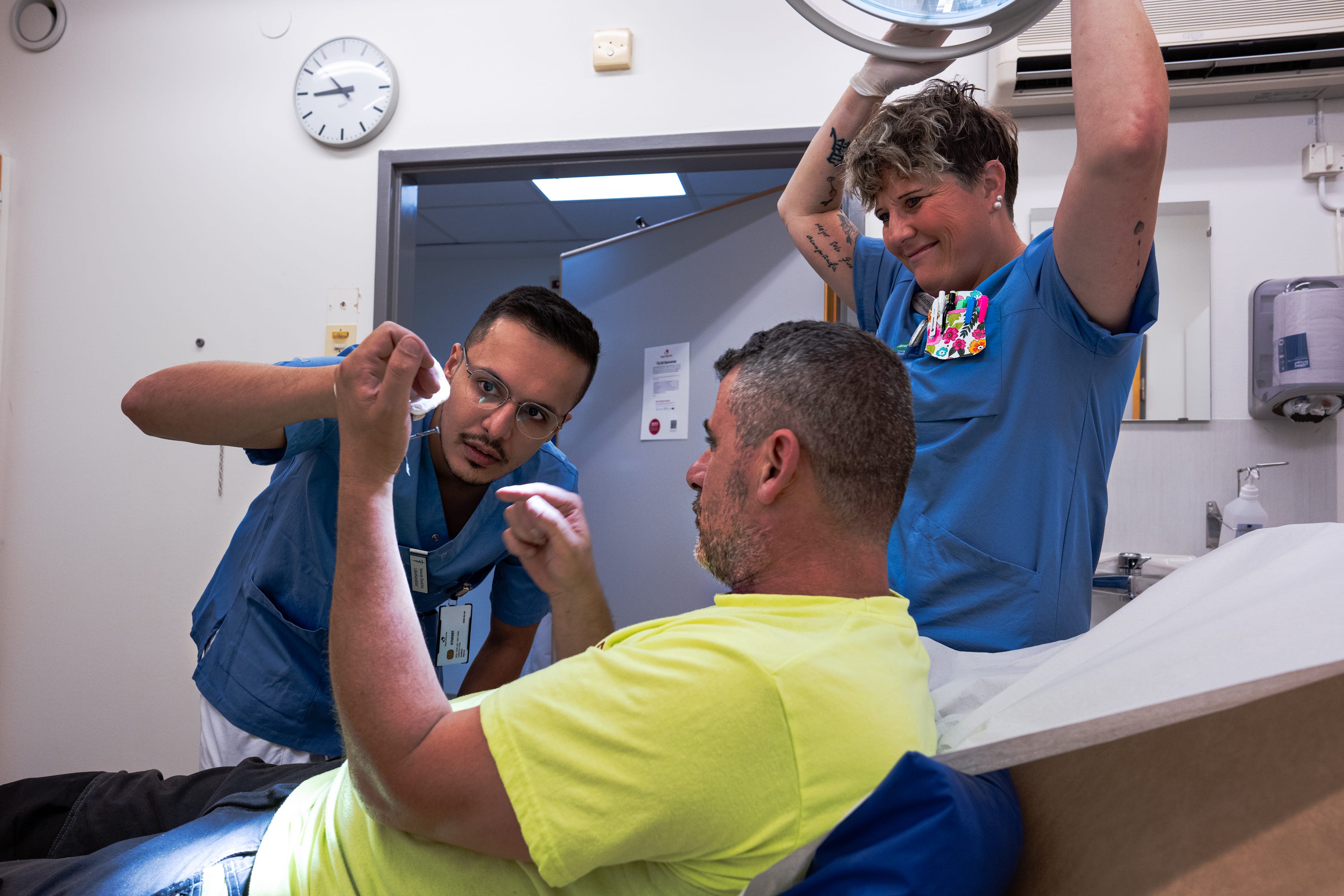
We arrive at the examination room and his patient, a construction worker with a nail through his hand, is waiting. Nawras opens the door, introduces himself and within seconds the two of them are joking, the construction worker laughing at how sideways his Monday morning has gone, Nawras peppering in questions as he pulls on latex gloves and lays him down. He cuts away the work glove, presses gently along the fingers, checking for nerve damage. Before the man has even finished a story about his foreman Nawras is sitting him back up. He’ll need to go to the regional hospital, there’s some numbness and he wants it examined closer before the nail is taken out. He calls a nurse, gives the man’s shoulder a squeeze and walks out. There are other patients to see.
Nawras is a final-year medical student, a few short months away from finishing his clinical rotation, graduating, becoming a doctor, and entering the chapter he has been writing his way towards for over a decade, since he was a wiry thirteen-year-old sitting beside his father’s bed in Syria shortly before he died, as he told him he’d make a good doctor, to try, as he told him to take care of the family, to keep going.
And he has. Since then he has escaped Syria, stolen himself alone across stormy Mediterranean seas, criss-crossed Europe, learned a new culture, a new language, navigated endless bureaucracy, reunited his family, thrown himself into school and community, graduated valedictorian, become a Swedish citizen, made it into medical school, poured himself into textbooks and practicals and thousands of coffee-fueled hours studying late into the night, and is now here, treating patients in a country that took him in as a boy of fifteen, gave him peace and stability and enough space to plan and dream and succeed, and he has, by nearly every metric, he has. He is making it. And he is thankful for that, for how the dice has landed. Thankful for this luck, for family, for god and for this cold country in the north. Because he knows it is rare and he knows it could have been otherwise.
And yet amidst it all he is thinking about leaving.
There’s no plan, no urgency. He hasn’t yet packed his bags or applied for jobs abroad. But the possibility sits with him in a way it didn’t before, this new quiet calculation humming beneath the surface as he weighs what staying looks like against what leaving could offer up.
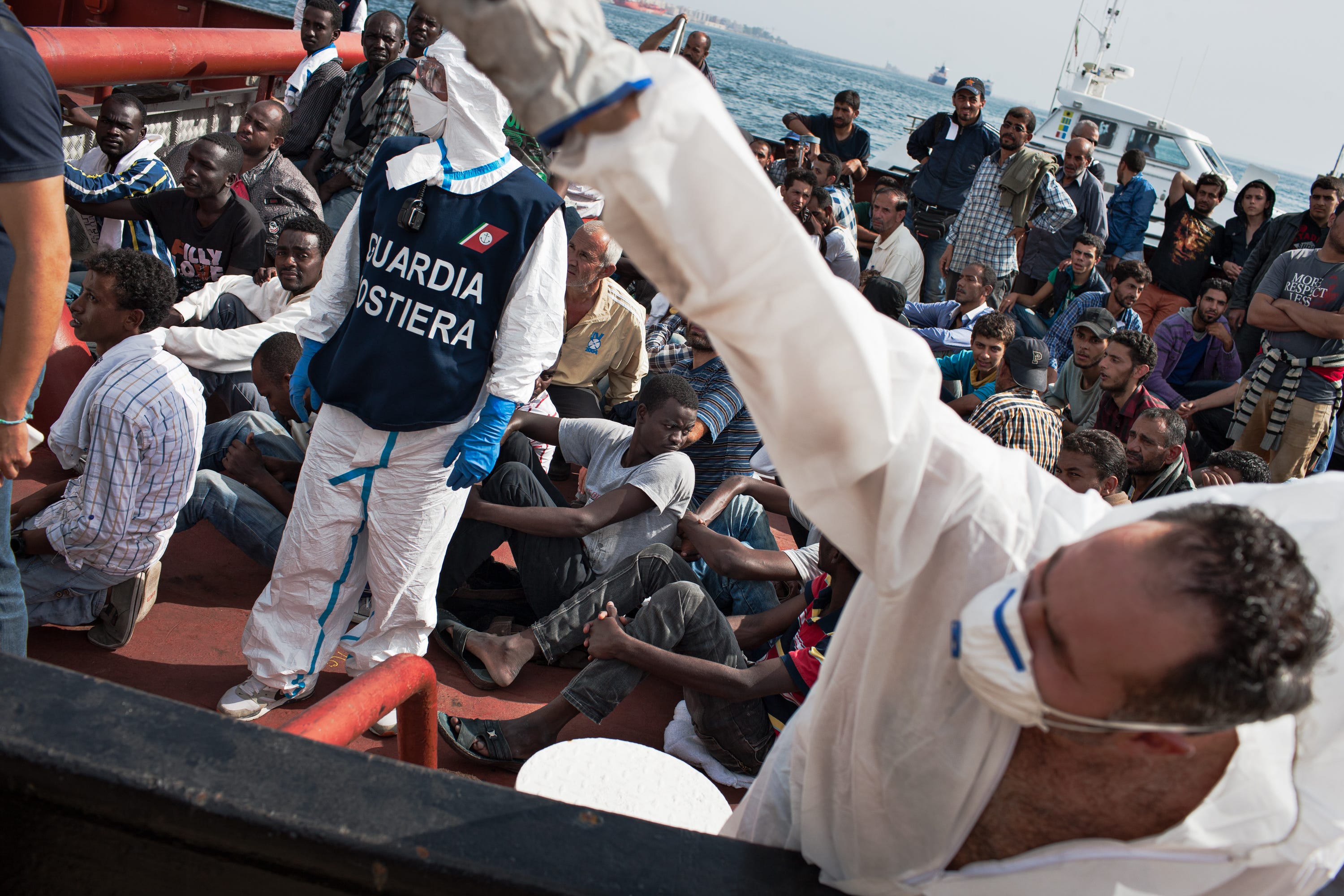
The first time I met Nawras he was a boy of fifteen standing alone at a crowded port in Sicily. It was October of 2014 and he had just spent eleven days at sea, his body tossed and wrung out by the crossing from Turkey, eleven days hunched in the hull of a leaky wooden boat with close to a hundred other migrants, vomiting, dehydrated, too sick to eat or drink, the hours bleeding into each other and the nagging, gnawing question looping in his mind - will I make it?
His body was slight, bony elbows wider than his biceps, the frame of a teenager who had begun to grow faster than he could feed it. His eyes, dark and kind, scanned the Italian port as he stepped onto land, reading each person he saw, absorbing who could help him, who could hurt him. He approached me and asked to use my phone. He needed to call his mother. To tell her he was alive.
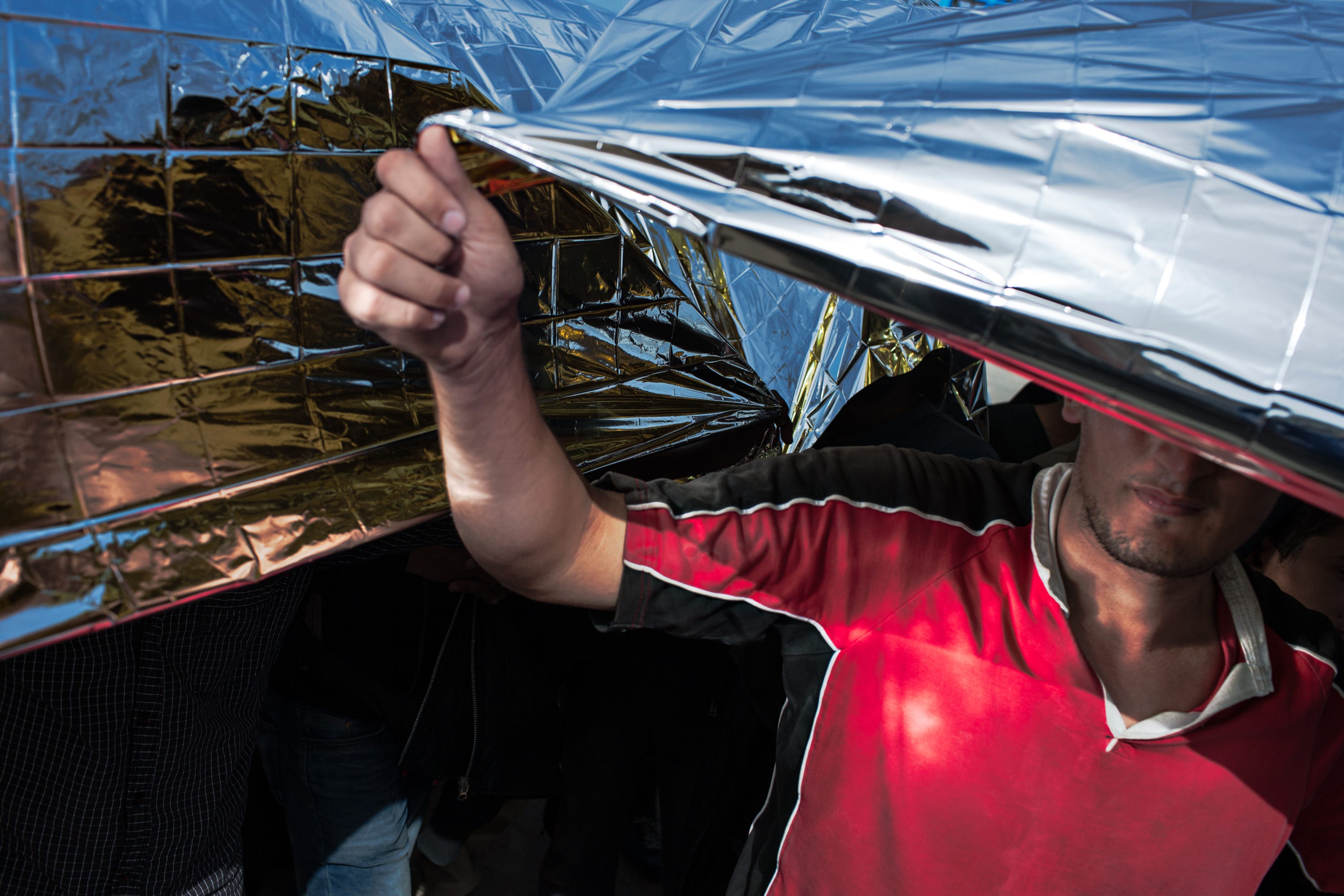
When he was done, we stood by the side of the port’s steep edge, Italian police and red cross workers swirling around as waves crashed below, and we talked. He asked me how far the train station was, whether I knew where the Italian government would take him, whether it was easy to escape. Within a few days I was headed north with him as he traveled to Sweden to claim asylum.


In the years since, we have kept in touch. I have come to care for him. He is my friend. And twice I have tried to come back and tell the story of what he has made of his life. Each time has been complicated.
The second time I came to Sweden was this past September. I came expecting to document the arc from refugee to doctor. The trials and the triumph. To understand the climb from the margins to the middle, what was gained and what was lost along the way. A narrative that would carry a reader from that boy at the port to this man in scrubs, the whole thing tied up with a nice little bow. The reality though was that the lines were not clean and clear the way stories make them out to be. What I found was difficult, complex, beautiful, mundane. It was a life. Not a narrative. Not a story about a refugee, for Nawras was no longer one, and he was done being seen as one. He was willing to talk about the past, but he was done being defined by it. Done being seen as the boy on the boat, the refugee in the system, the newcomer fighting his way in. He was a young Swedish man with a life he had built and fought for, a life he wanted to protect, to define on his terms, to get on with living, not explain, or excavate for someone who, in many ways, still saw him as the kid he used to be.
And in that friction between the story I came for and the life he was actually living, the one he was rightfully guarding, I found something I hadn’t really expected. Something about when we are allowed to simply be the thing we truly are, when we are allowed to move beyond our past, about what it means to outgrow the thing the world has decided you are.
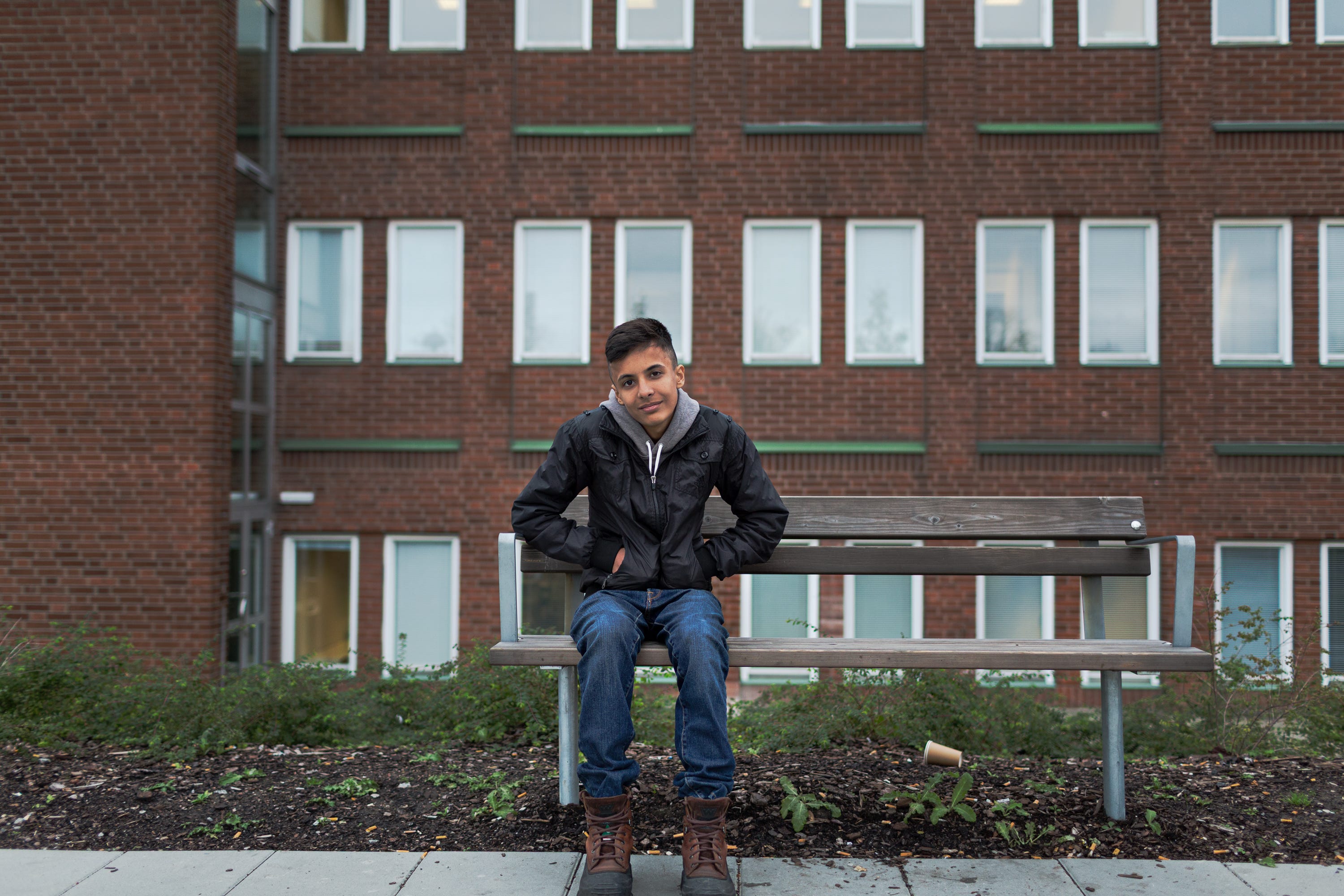
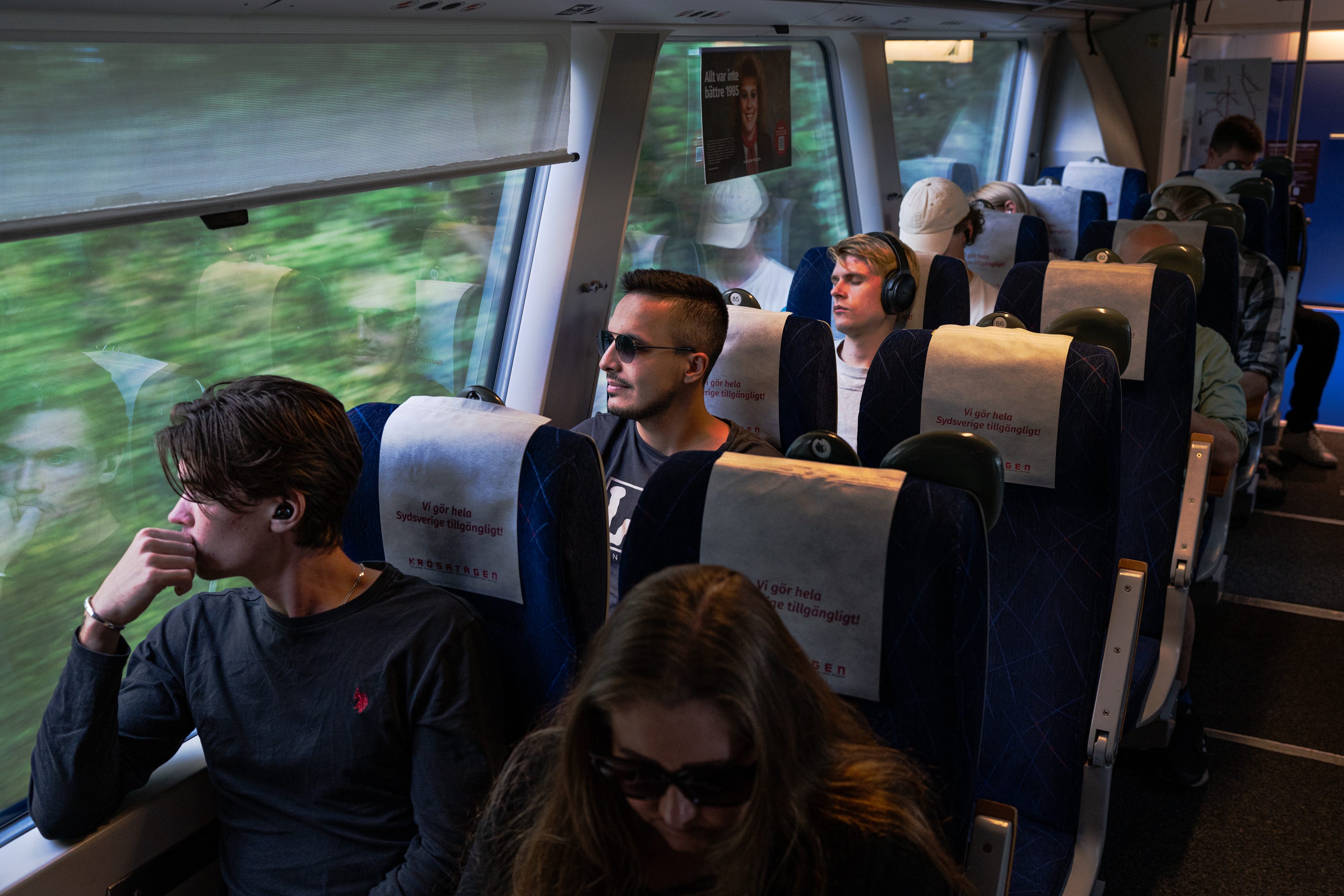
Nawras remembers the silence most. Roughly a week after arriving in Sweden in 2014, he was sent to a tiny village about four hundred kilometers southwest of Stockholm. It was the sound of order and safety, of nothing moving out of sync, but also the quiet of distance and isolation. On the way there he had fallen asleep on the train and remembers looking out the window when the train pulled into the station and he woke, “We were in the middle of the forest and I was like, oh nooo what the fuck? I’m not staying here. It’s empty!” He laughs now, putting his hand to his forehead, “It was so quiet. There was nothing there.”
The center was for unaccompanied minors and it was where he and a few dozen others had been sent to wait out decisions on their asylum applications. He would be there for ten months. And as time extended before him, depression became a daily reality, a force of gravity he and others had to constantly push against.
“It was so hard and lonely,” he says of that time, “and sometimes it felt hopeless. I was like, this isn’t worth it.”
But he had placed his bets and now his task was to wait. Like so many refugees caught in the slow machinery of bureaucracy, he needed to quiet his life, disassemble it and put it on a shelf, ignoring its antsy calls to seize the day.
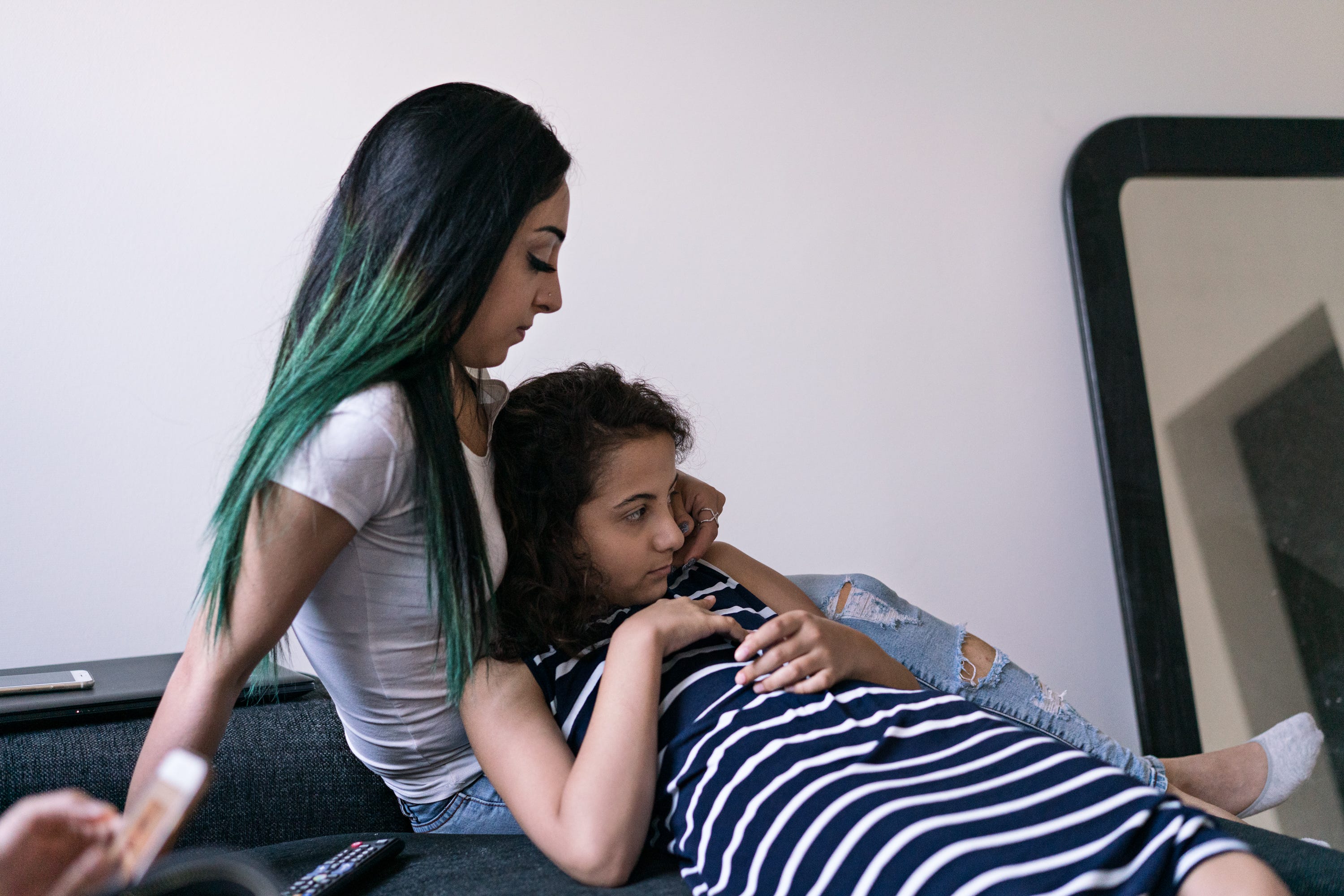
His two older sisters were a lifeline. They had arrived in Sweden a few months before him and were going through the same emotional rollercoaster in migration centers of their own. Even though their camps were horrible, they kept him focused on the bigger picture. “They would say, ‘don’t be silly, it’s good, everything will be good’, and they’d try to distract me,” Nawras recalls. “They would tell me these miserable stories and they’re laughing. We’d all be laughing.”
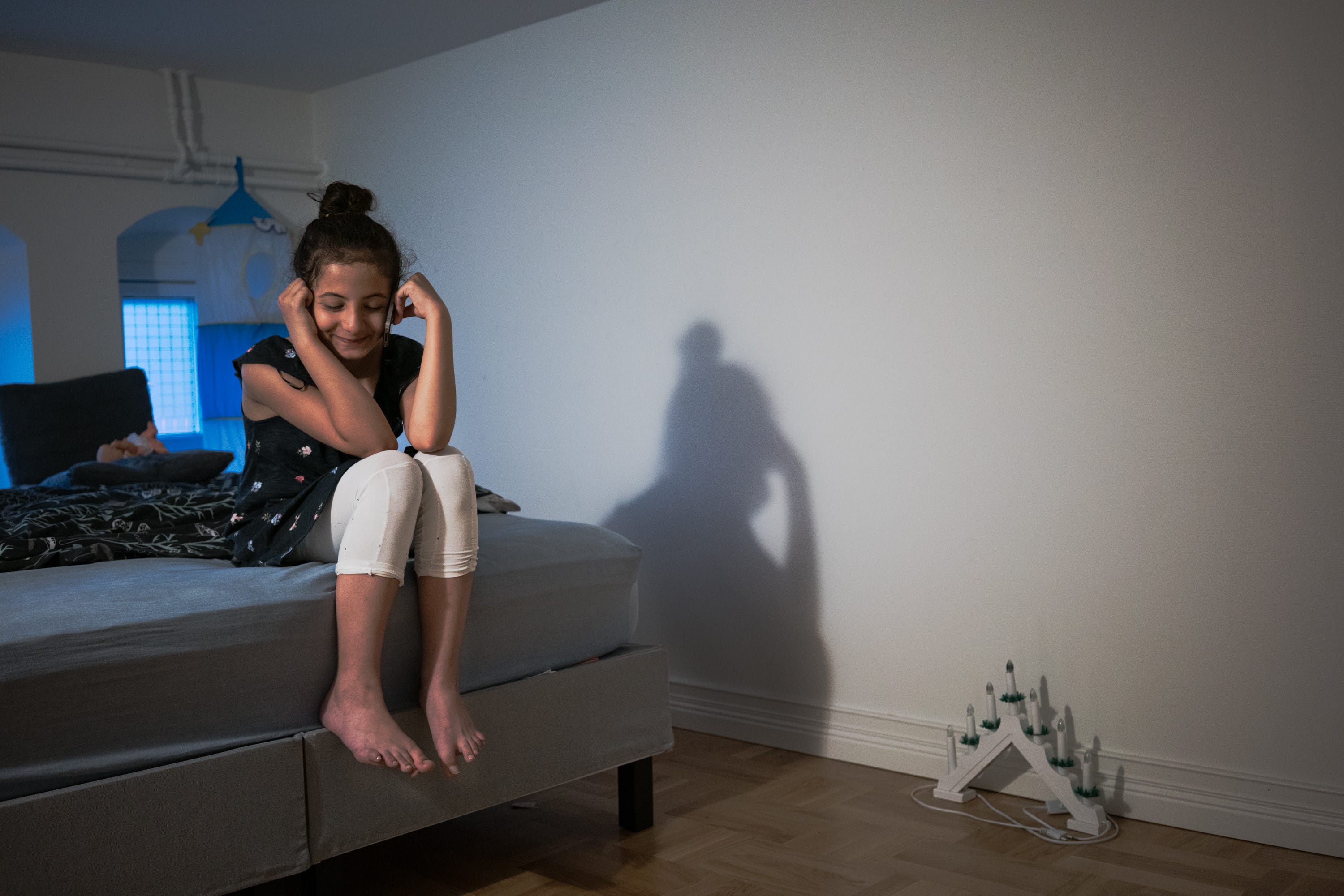
He chuckles as he remembers this, but I can see that the effort exhausts something in him, pulls him somewhere lower, more removed.
“How are you doing?” I ask him as we talk, “Did you just get hit by some sadness? Your face and energy just changed. Does chatting about all this bring you back there?”
He pauses, leans back slightly and takes a small breath, slowly closing his eyes, no more than a long blink. “Yeah... yeah, it’s like when you trap some memories and now starting to think about it, it’s like...” He pauses, searching for the words, lifting his hands together, fingertips touching, and spreads them apart in front of his face, like he’s miming a flower blooming or the destructive force of an explosion. “It becomes real again. It took so much energy so even speaking about it... you remember these moments.”
Finally, in August of 2015, ten months after arriving, he got his residency.
“It was like finally being seen. Being seen by the system. I finally existed.”
With papers in hand he threw himself into Swedish, progressing so quickly he skipped a language course and finished high school prep in the minimum time possible. But even as his life moved forward, his mother and three siblings were still in Istanbul, and every day that passed was a day closer to his eighteenth birthday, after which bringing them over would become exponentially harder, if not impossible.
That stress burrowed into his days. He called the migration agency constantly, laid awake at three in the morning staring at the ceiling, mind whirring, repeatedly made the long trip to the migration center in Malmö only to wait for hours and hear nothing. Most of the time they just said wait. He’d call again anyway.
He woke on his eighteenth birthday without news, but midway through the day the phone rang. It was a woman from the migration authority. “Happy birthday,” she said, and told him his mother’s application was finally approved. She said she had known for days but wanted to give him something on his birthday.
“At first I didn’t believe it,” Nawras remembers, “I was texting and calling and emailing so much and for such a long time. So I don’t know...she felt it was like a present. But for me it wasn’t.”
Not all the news was good. The process had taken so long that one of his sisters had aged out and remains in Turkey to this day. The system that once held him still holds her, and there’s nothing he can do but call, listen, and try to help problem-solve the disjointed life she’s had to piece together alone.
It would take months before he felt grounded in this new reality, but he and most of his family now had papers, they had found an apartment, and he was in high school, learning the language and culture and coursework he needed to build the life he wanted. The following summer, after he turned eighteen, he got a job at an elderly care center.
“It was the first time I felt normal,” he says of that time. “Like it was just a normal life. You have friends, we share things, we go to school together, we go to the gym and then we plan things. Like on this day I have an exam so I can’t go out but you can on this day. You know, you’re just like... you’re just normal.”


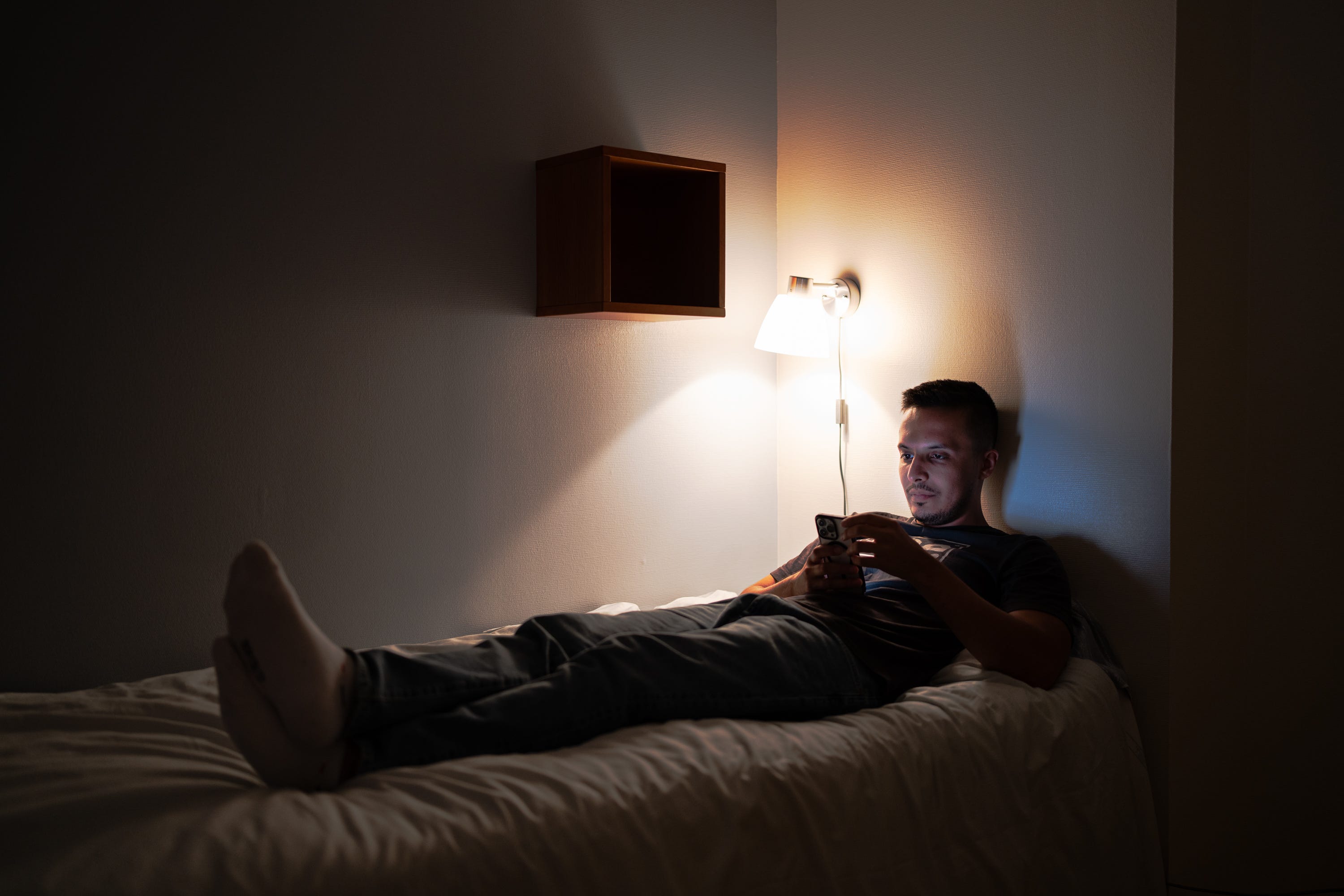
Life, by and large, isn’t made up of massive peaks and troughs. It’s made up of boring, mundane moments, of beautifully unremarkable acts and events that we are privileged to glide our way through, unaware of the control we’ve exerted to structure them and of the effortless rhythm and routine they collectively give to our lives. Taken together, they are a manifestation of, a statement of, what we want and who we want to be - I make my coffee in a cafetiere and like it black no sugar, I like my eggs sunnyside up and fried in butter, I go to the gym Tuesday and Thursday evenings, I read in bed. They help form our identity and our identity informs them in kind.
When we are forced to flee our home and country, we must often cut connections to community and culture in the process. But the sheer precarity of that new life, that new and uncertain hope, cuts a wound deeper still. “You go out with friends but your mind is thinking about your papers or about your family or the next problem,” Nawras says of that tenuous time waiting, “everywhere you’re somewhere else”. And this mental displacement may be the ultimate toll, stripping away control over not just these quotidian details that build a life and sense of self, but also the very presence of mind to actually inhabit them.
Papers in hand, Nawras began building a life in a country that was changing around him, its politics shifting beneath his feet just as he tried to find solid ground.
For Sweden in 2015 was not the Sweden he would come to know. Back then, as Europe’s self-described migrant crisis reached a fever pitch, Sweden was seen globally as a humanitarian superpower. The previous prime minister had urged Swedes to “open your hearts” to the world’s refugees. The public and its government did, letting in over 80,000 asylum seekers in 2014 and more than 160,000 in 2015, the highest number per capita of any country in the EU. Then reality hit.
Nearly 10,000 migrants were arriving every month and the Swedish Migration Agency had begun to struggle processing applications. Across the country shortages emerged in teachers, interpreters and housing. The country that had built a million affordable homes in the 60s and 70s had basically stopped building, and by 2015 the shortage was dire for refugees and Swedes alike. In the southern city of Malmö, newly arrived refugees were at one point forced to sleep on the streets because no beds could be found.
The strain on the system had become politically untenable and near the end of 2015 the government tapped out. The country needed “respite,” the prime minister conceded. “We simply cannot do any more.” The government instituted temporary border controls with ID checks on all modes of transport between Denmark and Sweden. Permanent resident permits would no longer be the default. Instead, most refugees would receive only temporary permits and the rights to family reunification would be dramatically trimmed down.
The shockwaves seemed to reconfigure the entire political landscape. The intense pressures of the moment shattered old alliances, broke long-standing taboos and accelerated the rise of the Sweden Democrats, a nationalist party that would, over the following ten years, move from political pariah to central power broker.
“It was difficult to see how quickly the politics changed,” Nawras said of that moment when he left the center and began to build a life, “Sweden has given me so much. There were so many kind people that helped me in those early years. But it was also hard to feel that so many others were thinking like this.”
It’s easy to point to 2015 as the year that fractured Swedish society, but the truth is more complex.
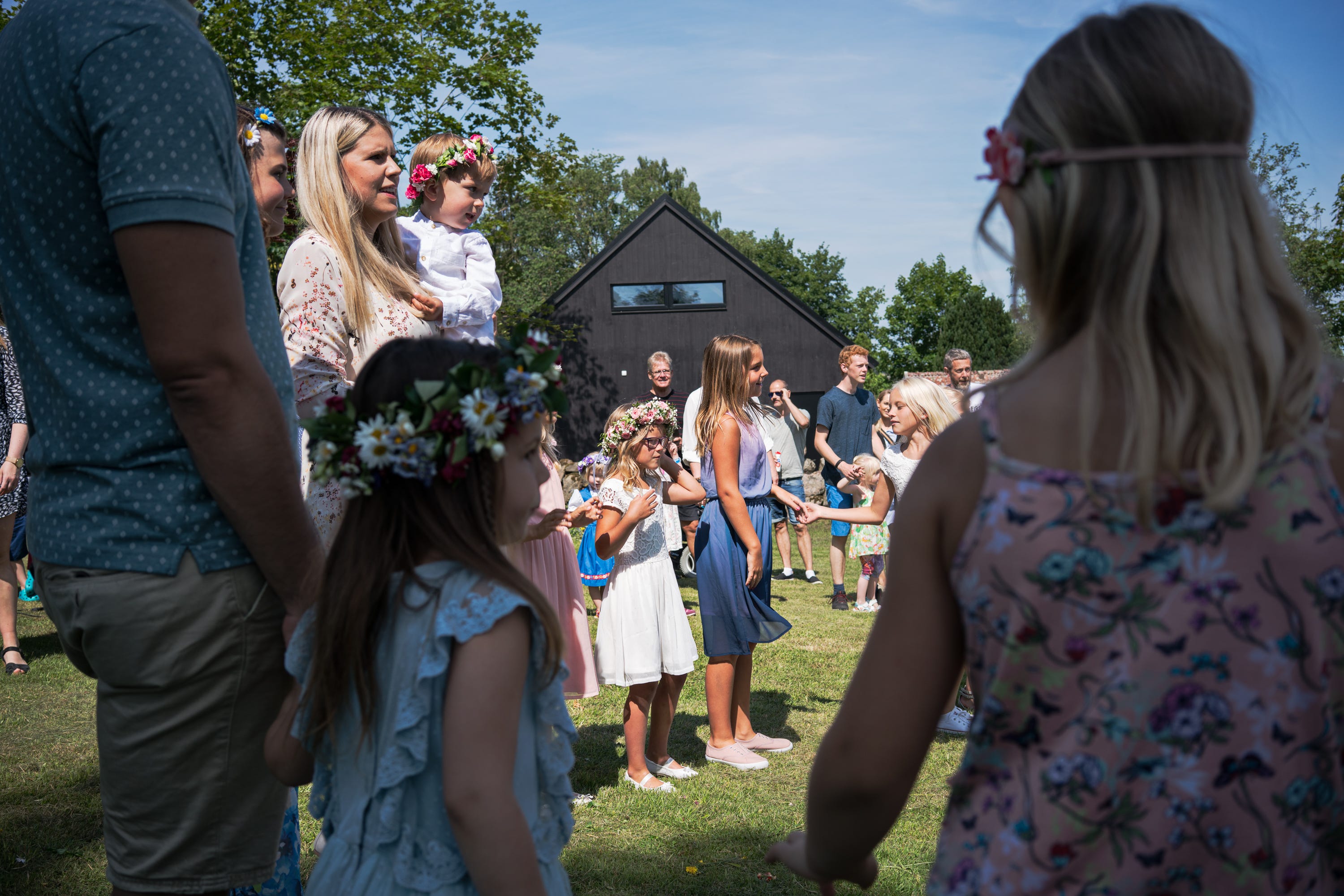
For much of the twentieth century, Sweden’s folkhemmet, or “people’s home,” promised cradle-to-grave security funded by a dynamic, privately owned economy. The Swedish state became the central actor in citizens’ lives, fostering what historian Lars Trägårdh calls “statist individualism”, a society where the state empowers individuals by liberating them from traditional dependencies on family, church and community.
But this all-powerful state also cuts the dependencies that build communities. “It allows for Sartre’s perspective - Hell is other people,” Trägårdh told me recently with a chuckle, “why do you want to make contact with other human beings if you don’t have to?”
Equally important, Trägårdh argues, is the understanding that charity has no place in this social contract. It is one of equality and reciprocity. “Citizens work, they pay taxes, they earn rights. It’s not a charity state.” As more asylum seekers arrived, more Swedes felt people were receiving benefits they hadn’t first contributed to and earned. They began to question whether their state was prioritizing them or leaving them behind.
These worries had been quietly growing for years, fed by that same shift in the 1990s that gutted housing, for the steady growth in equality that Sweden had seen for much of the twentieth century had begun to dramatically reverse, driven by tax policies that heavily favored income from assets over labor.
The shift has been stark. Sweden has one of the highest concentrations of billionaires per capita in the world, ahead of Germany, the UK and the US. “This concentration of wealth at the very top fundamentally challenges the Swedish narrative of being a country of equals,” Swedish economist Olle Hammar told me.
Into this mix, Trägårdh argues, came a political moment where both left and right looked outward, focused on globalist agendas, the right on free markets, the left on universal human rights and open borders. “Both sides no longer cared about the nation state,” treating it either as obstacle or vestige, and in turn created political space for the Sweden Democrats, the only party critical of immigration and the only one that “spoke positively about Sweden as a nation state.”
The other parties scrambled to catch up, and as Hammar notes, the overcorrection was dramatic. “Before 2015, politicians were more generous in their immigration policies than the average Swede,” he says. “And now it’s the other way around. Politicians will be much more anti-immigration than the general population.”
It was a perfect storm and the political narrative quickly connected the dots between the new arrivals and the country’s economic woes, a connection that experts say is simply not supported by the data.
“This is one of the most stunning things,” Swedish economist Jesper Roine told me emphatically. “If you look at what has happened to inequality numbers... essentially all of that shift happens in the ‘90s and early 2000s. 2015 is completely invisible in the statistics for this. It has absolutely no effect on overall inequality.”
Migrants didn’t break the Swedish model. They arrived just as the country was discovering it was already broken.
None of which changes the fact that Nawras has a schedule to keep. Back in the clinic, he checks his phone and we walk out of the office to a conference room for a brief orientation with the clinic’s head social worker, Camilla.
Camilla is a blonde, soft-spoken woman in her fifties, and she efficiently runs Nawras through the process of how patients receive the emotional and material support they need even after leaving the examination room. The presentation is short and towards the end it moves into a more informal conversation.
“Some people need so much more beyond medical care,” Nawras says, “A patient might be fine medically, but struggling with life outside. It’s really important what you do.”
Camilla smiles warmly. “It’s true. And I’m sure that with your background, coming here as a refugee, you understand how important this kind of support is.”
The comment hangs in the air for a moment. Nawras nods, offers a polite smile and agrees, “Yes, of course.” The conversation moves on, and a few minutes later we’re walking back through the corridors of the clinic.
Back in his office, Nawras is still wrestling with it. “It felt weird when she said that. I know it didn’t come from a bad place, but it made me question how she saw me,” he reflects, holding onto each end of the stethoscope around his neck, rotating slightly from side to side in his chair. I ask him what he means, what felt off in her comment.
He pauses for a moment, choosing his words carefully. “I don’t see myself as a refugee. I’m not a refugee. I’m not vulnerable and in that place anymore, so when someone reminds me of it... it makes me question whether they see me as that. It kind of puts me back in that place.”
His lips tighten and he fidgets in his chair, scratching his neck, then rubbing his shoulder and upper arm as if his hand needs direction he can’t give.
“I worked so hard to get here. And I want to be proud of what I’ve done, where I’ve come from, but I also want to just be... a doctor. I just want to move forward and start this next chapter.” He pauses. “I’m really grateful for what this country has given me. You know, the people who have helped me get here. But I don’t want to just be seen as someone that Sweden helped.”
He takes a breath and stares into the middle distance for a brief moment, his body still, before his focus clicks back into the day.
There is always a tension between the world’s perception of us and our own. This tension births ambition and fear, indignation and shame, as we so often secret the scars and tout the wins, spinning yarns and thumping chests to convince the world of the things we so want to be true yet fear are not. Nawras is no longer a refugee. He is a Swedish citizen, a medical student, a 26-year-old man with friends and crushes and colleagues he can’t stand. He goes on vacation, stacking photos for the ‘Gram, he pays credit card bills and eats microwavable pizza because he can’t be bothered to cook. He has built a rhythm to his days, his own quietly predictable cadence that gives measure to his life. But he has assembled that normalcy out of painful and extraordinary circumstances, and that past is not easy to leave behind. It is present in Camilla’s comment, in his relentless drive to become a doctor, in the way he bulk buys for his mother to ensure she has enough while he is away, in the way he chats with his sister late into the night, piecing together her fragile life in Turkey.
In the years since Nawras arrived, Sweden has been on its own journey to redefine itself. Heavily influenced by the Sweden Democrats, the government has instituted what it calls a “paradigm shift” on migration, outlined in its Tidö agreement, and pivoted away from humanitarian asylum policies toward prioritizing highly-skilled immigrants, a bet that by filtering for a smaller number of high-income earners it can stabilize the state’s finances.
Under these new rules, a young refugee like Nawras, let alone his family, almost certainly wouldn’t be allowed to stay.
But the gamble cuts against the country’s own interests. For much of the twenty-first century, immigration added roughly half a percentage point to Sweden’s annual economic growth rate, offsetting a low birth rate and aging population while bolstering the tax-paying workforce that funds the comprehensive state support so central to Swedish life and identity. Now the country is staring down the barrel of net emigration for the first time in over half a century. One in three practicing doctors is foreign-born and over half of all new specialist licenses in the past decade went to immigrant doctors. The consequences of losing them are not abstract with a study recently showing that the communities left behind by Swedish doctors saw mortality rates jump by 7 percent.
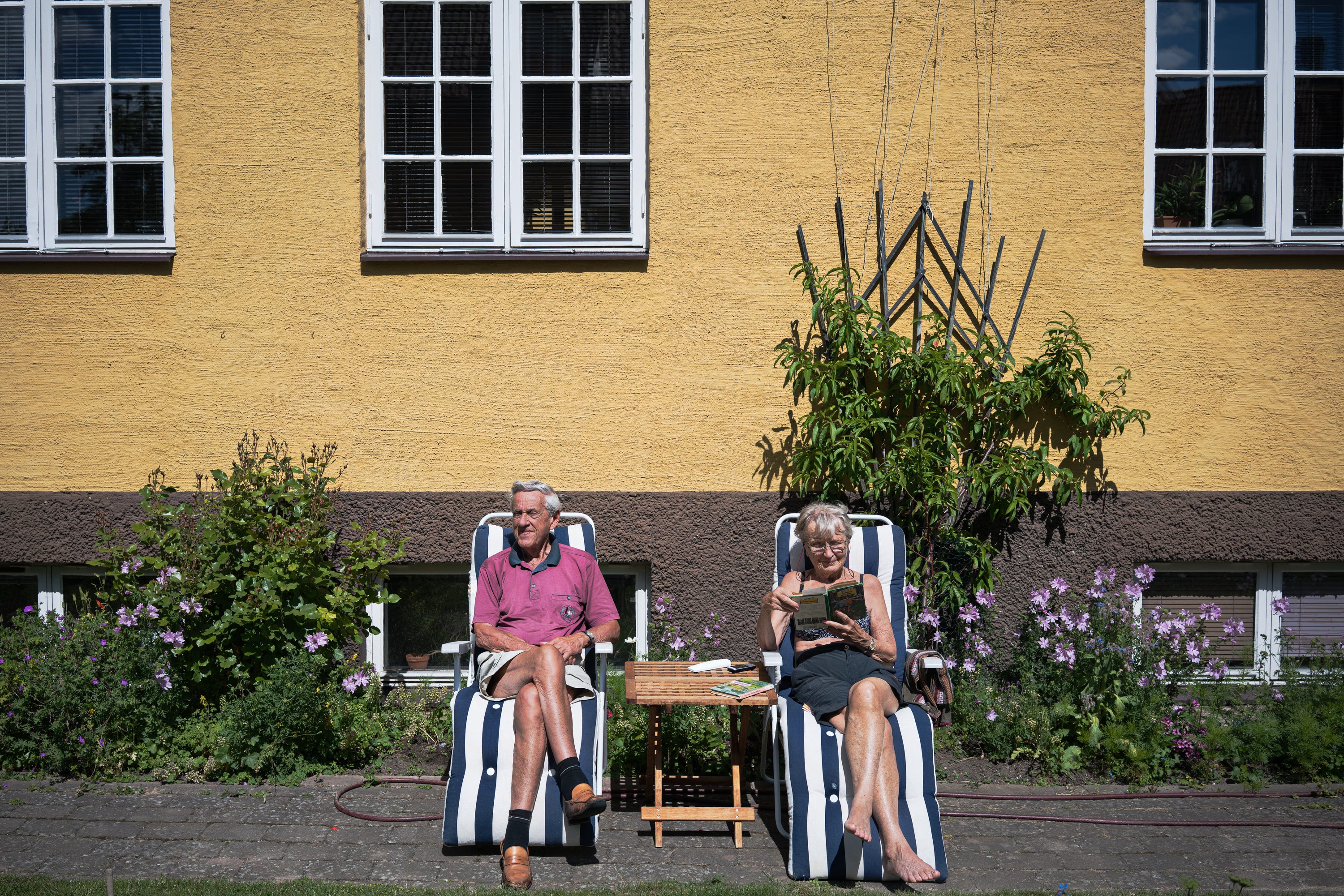
That pressure is only set to mount as one in five Swedes is already over 65, a share that will rise to one in four within fifteen years.
Sweden doesn’t have an immigration problem. It has a Sweden problem. And that problem creates a paradox at the heart of the country’s identity crisis.
The state is redefining who gets to be Swedish while depending on the very people those definitions threaten to exclude, gambling that it can preserve its welfare model by limiting who joins, even as those limits may undermine the system that model is built upon.
While politicians in Stockholm grapple with what adjustments to make, the future of the Swedish welfare state is being negotiated daily in towns like Vimmerby. In this town of just over 15,000 people, more than 4,000 are over 65. Of the 16 doctors working to care for them, 11 are immigrants, and two of the native Swedes are already retired, clocking in just part time. Here, the future of healthcare, as in much of Sweden, rests squarely on the shoulders of people like Nawras.
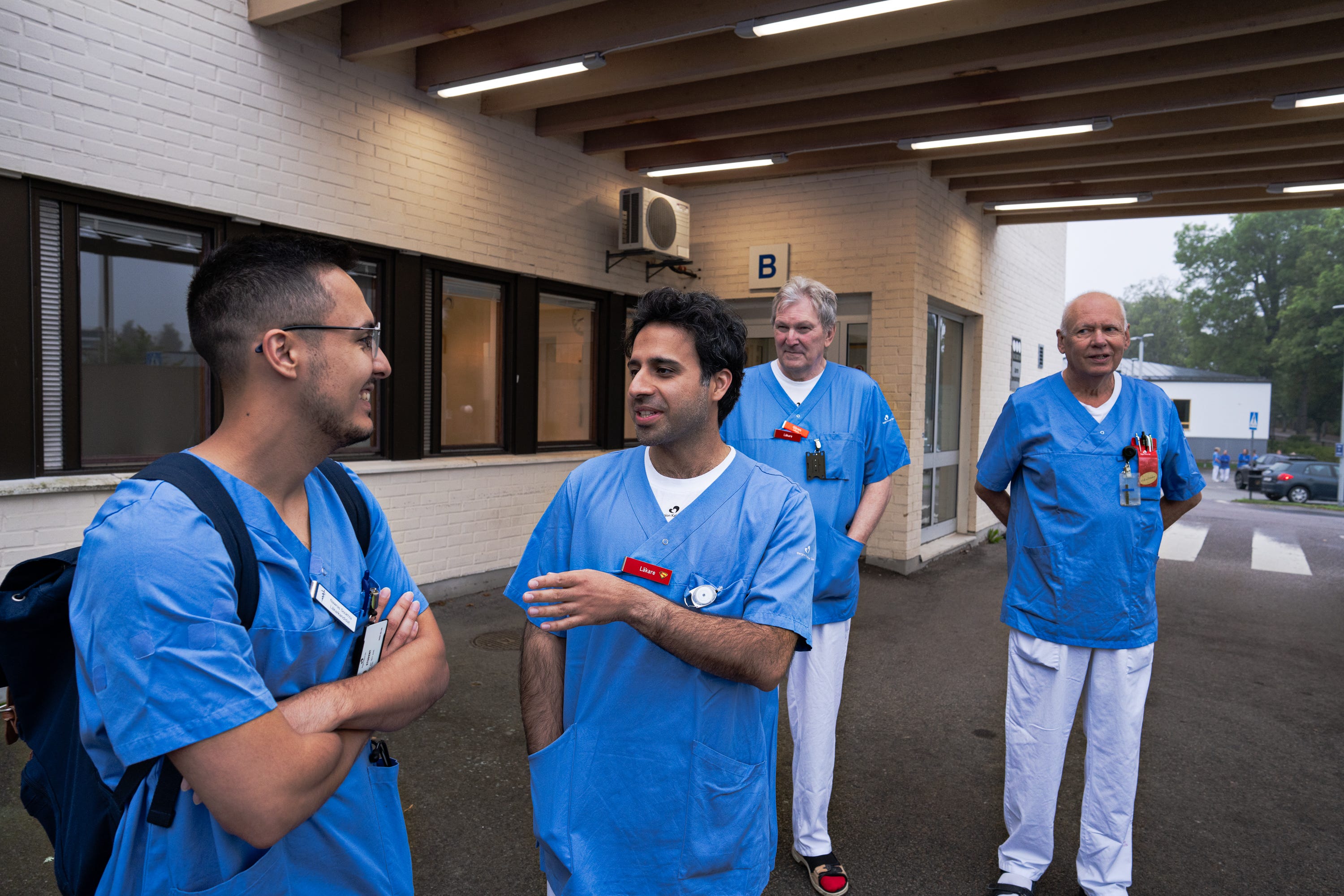
Yet Nawras and a number of other foreign-born medical students I spoke with are weighing their options. A future in Sweden is far from a given as they’re pulled by higher salaries and more welcoming environments abroad.
For Nawras, like others, the decision isn’t purely professional. His sister is still in Turkey, at the whims of an administration where she has no permanent status. His mother, a talented professional who raised seven children alone after her husband’s death, has found herself socially isolated in Sweden, her daily rhythm reduced from the expansive one she knew in Damascus to a handful of weekly interactions, sidelined at times by the hijab she wears. But there is also immense gratitude for what the country has given him. And it’s home. The calculation isn’t simple, and one he hasn’t yet made, but such personal factors are at the heart of the matter, shaping whether someone like Nawras stays or goes.
It’s almost painful in how simple a bind it all is. Nawras succeeded on exactly the terms Sweden claimed to want. He learned the language, crushed it in school, and is training for a role the country desperately needs. He worked, he integrated, he paid in. And yet the country that made space for him is now making clear there’s no more room for those like him. Whether Camilla sees it or not, there is truth in her comment. On some level Nawras will always carry his past. The question at play is whether Sweden will see that past as a testament to its success or to its missteps, as justification for closing its borders.
When Nawras and I first video called last year I couldn’t help but smile. We had spoken and exchanged voice notes over the years, but seeing his face, how much he’d grown, was surreal. It’s an obvious thing - of course he’d be older - but it still took me aback to see him as a man, his face full and healthy. We caught up, talked about family and friends, school and work, and I told him the idea of doing another follow-up story. He liked the idea and we were genuinely excited about seeing each other in person after so many years.
But a week later, in another call, the hesitation surfaced. That rational caution anyone feels when someone asks to document their life. That essential question hanging over it all - how much of my life?
“I’m not an open book,” Nawras said. “There are some elements of my private life that I want to keep private. We can talk as friends but there are times when it needs to stay between us as friends.”
I respected that. We were planting flags we hadn’t planted before, defining what was off limits and what was fair game. I told him I would follow his lead. He would determine how much to let me in and how much of that could be documented.
A few weeks later, the day I was supposed to fly out my phone buzzed while I was driving. It was Nawras, and so I pulled over to the side of the road to read the message.
A family member was sick. Nawras had barely slept in days. He didn’t know how much time he’d have for the story. My stomach dropped - for him, for his family, for the stress he was under, and, if I’m honest, for me. This was the first story I was reporting for this publication and a delay would cost time and money and momentum. But there was something else, something I don’t feel good admitting, because as I sat there in the truck, I wasn’t sure it was real. This wasn’t the first time access had fallen apart, and so I wondered if Nawras was trying to say no without having to say no.
When we got on a video call later that day, my doubt evaporated the moment I saw his face. The exhaustion was so clear, the worry so palpable. We talked it through and I decided to delay. I didn’t want to add stress to a stressful time, so I’d rearrange stories, and get up there at a later date.
But the exchange clarified something. Back in 2017, I had flown to see him for the first time. His mother had just arrived and his life was beginning to settle. I wanted to document it. Yet his sister was still stuck in Turkey, her appeal pending, and after two days together I could feel something tightening beneath the surface. On a walk through town one night, Nawras told me it was difficult having me there. His mother felt protective of this fragile thing they were building and they didn’t want to draw attention to their life in a way that might jeopardize his sister’s asylum and their collective future. We decided I should leave.
The decision felt right, and really like the only one to make, but I was disappointed. I don’t think either of us fully understood what was happening in that moment. The same urge to protect was there for him, but the confidence in his life, in his right to guard it, wasn’t yet steady enough to understand it and say it from the outset. And I don’t think I fully grasped what my footprint was, what I was asking of him and his family. That was their life, not my story, and there was a tension between what we each wanted that neither of us had the language for yet.
In 2025, the tension was the same but we could see it more clearly. His life was full and complicated. A sick family member, a job and a family to care for and protect, his own swirl of obligations and responsibilities, worries and hopes, the messy and unglamorous reality of life just being lived. I would need to adjust to that, to respect it, to see it for what it was. His life is not mine to tell. He is its director, and he decides how much of it to let me in on, how much I can share here with you. His family member’s illness, for example, is his and his alone. Other struggles, other private corners of his life are likewise for him, not texture for this.
And this is what arrival looks like. Not the job or the citizenship or the language. Those matter, undoubtedly, but even more is the ability to say no, the ability to set a boundary without apology and protect your life because it is yours to protect. And it’s the openness to say no to the life you’ve built, the willingness to leave, because before you arrive you are so focused on getting there that there’s no seeing beyond it, but once you’re there, once you settle and have built something real, something that’s yours that you can hold in your hands and assess and judge clearly without pressure or distraction, and decide whether it’s what you actually want, what you actually need, that may be the clearest sign you have arrived.
Even still, the world doesn’t always honor it. We all carry pasts we’d rather not perform for others. For most of us, this is usually a minor frustration in the form of a high school friend who sees you as the reckless teenager of your youth, the family member who won’t let go of who you were at twenty. We get to roll our eyes, change the subject, move on. The world, by and large, gives us more grace to be who we’ve become.


Refugees are not afforded that same space and become fixed in the public imagination, this headline-making label pinned to their backs. They remain seen at their most vulnerable, their most desperate, their most dependent. The boat, the camp, the paperwork, the waiting. That is who they are, who they will always be, no matter how many years pass, no matter how much they build, no matter how fully they become something else, the world keeps calling them back to a chapter they have already closed, because even “poor you, look what you have endured” becomes “amazing you, look what you have overcome” and always it is defined by the past, by the pain, its meaning rooted there. And that pain was true and real, but it is also not ours to own, the meaning not ours to design, it is the property of each person who has borne it, who has carried it through the deserts and across seas, who has bled it out through tears and midnight rage and moved o n to live something else, become something different. It is theirs to choose.
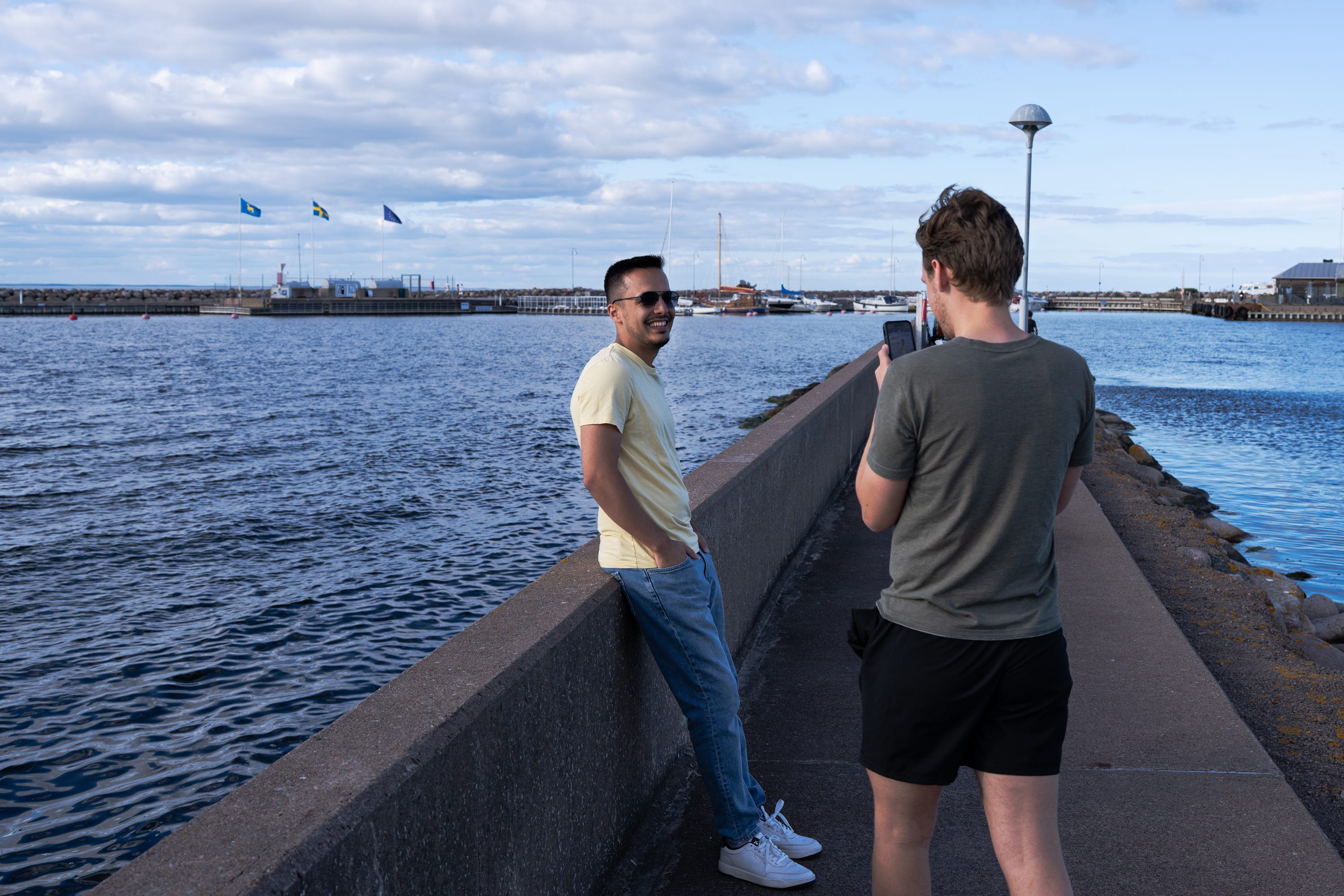
Sweden is recalibrating who gets to be Swedish. Nawras is deciding whether he wants to keep being Swedish. And I am finishing a story that on a certain level, I’m not sure he wanted told, one that is accurate and incomplete, accurate because what is here is true, incomplete because a life is always more than what we can capture, and because Nawras has the right, as we all do, to tell his own story and to stop telling it when he’s done.
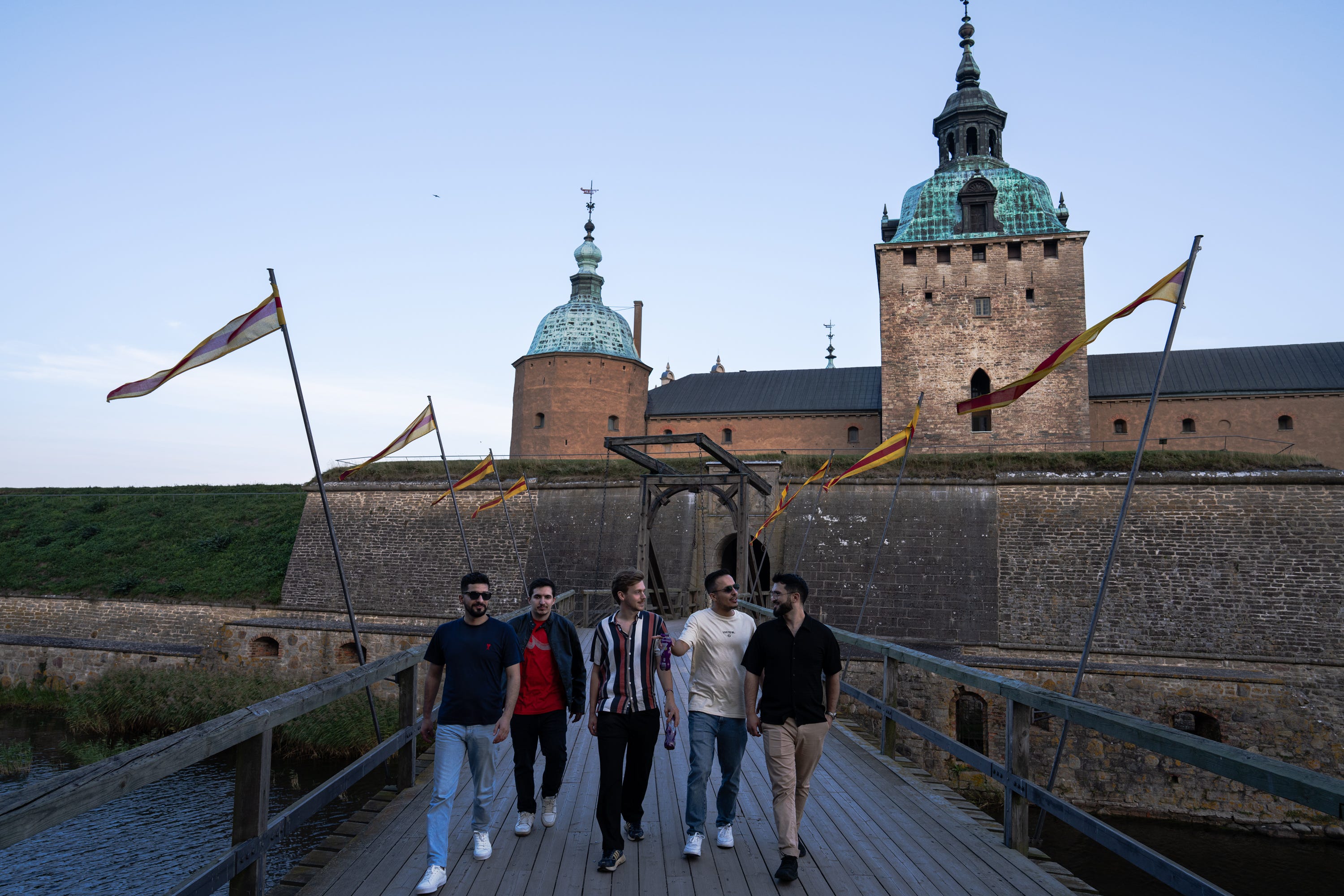
The story about Nawras is not really a story about a refugee. It is a story about a man who was once a refugee and is now something else. It is about a Swedish man, a soon-to-be-minted doctor, a son, a child among seven, a young 26-year-old figuring out his life like anyone else as he applies to his first jobs out of school, catches feelings for a colleague and drives late into summer nights bullshitting with friends, the windows down and the music up. It is a story about a country that opened its doors and then began to close them, that invested in people like Nawras and is now questioning whether people like him are worth it. It is a story about what we owe each other, what we owe ourselves, and who gets to decide when a chapter is finished.
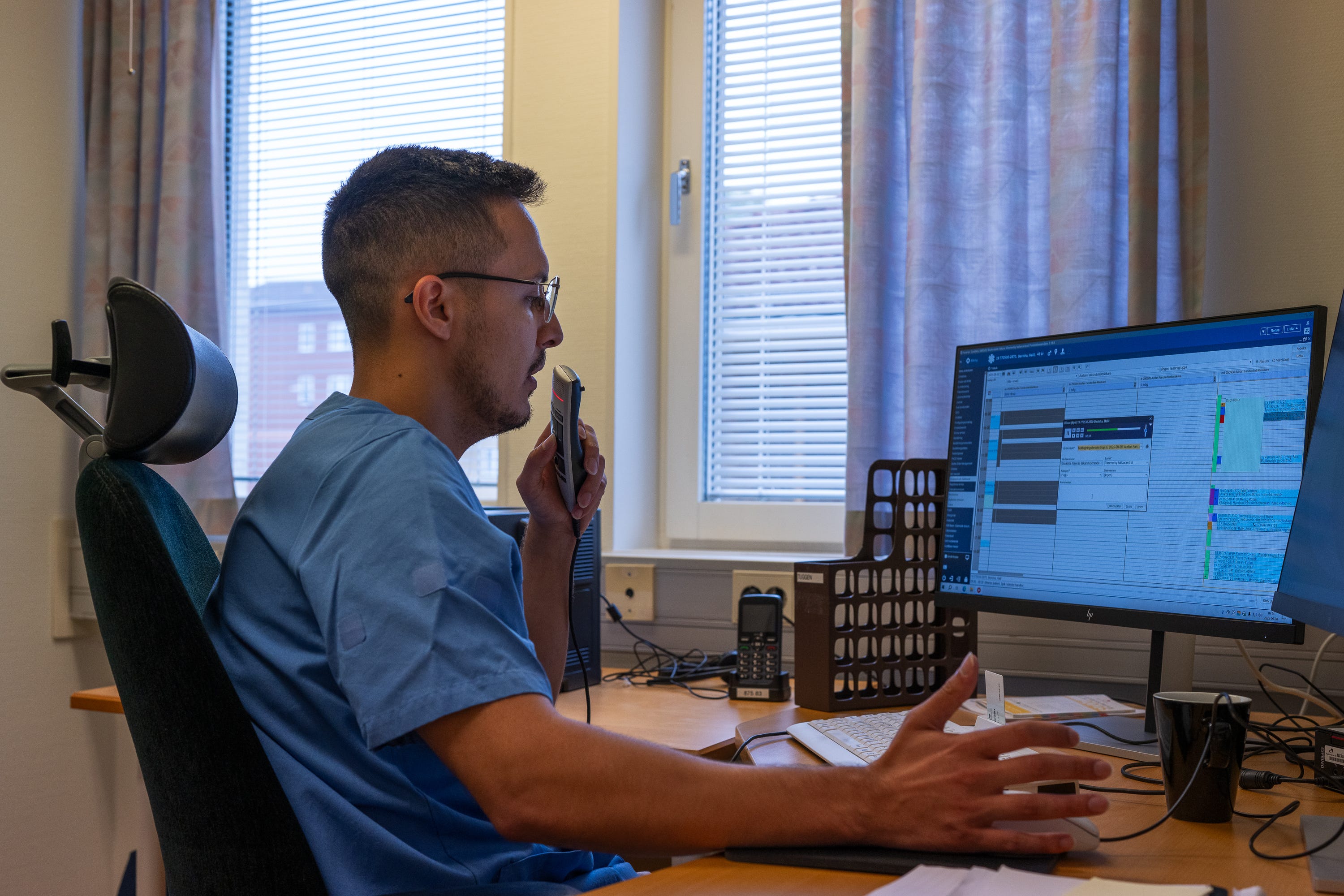
Sitting with him now, back in his office in Vimmerby, I watch as he dictates notes from a patient he has just seen with tinnitus. The man was retired, having worked in a local metalworking factory for over thirty years. For twenty-five of those years he has suffered from a near-constant high-pitched ringing in his ears, the scar of a physical trauma he suffered on the job long ago. He tried all kinds of treatments but nothing worked, and over time it became just one more thing he learned to bear. Recently, after an extraordinarily stressful year, the ringing got worse, waking him at night with headaches, dizziness, pulling him once again from his day-to-day moments into this pain from days gone by.
Nawras leans back in his office chair, dictaphone in hand, and looks up at the corner of the white ceiling, absorbed in thought as he notes the man’s symptoms and recommendations for treatment. His stethoscope is wrapped around his neck, and I remark to myself how he looks just like a doctor. The thought catches me as I think it, and I can’t help but be annoyed with myself. He looks that way because he is almost a doctor, no longer that young boy I first met.
He finishes his dictation, checks his schedule and sees he has one more patient, the last one of the day.
We get up and walk to the examination room. He reaches for the door and pauses for a moment, a beat, nothing more as he adjusts his shirt, and then walks in. The patient is waiting.

This story was reported in September of 2025. Since then, Nawras has graduated and is now a practicing doctor.