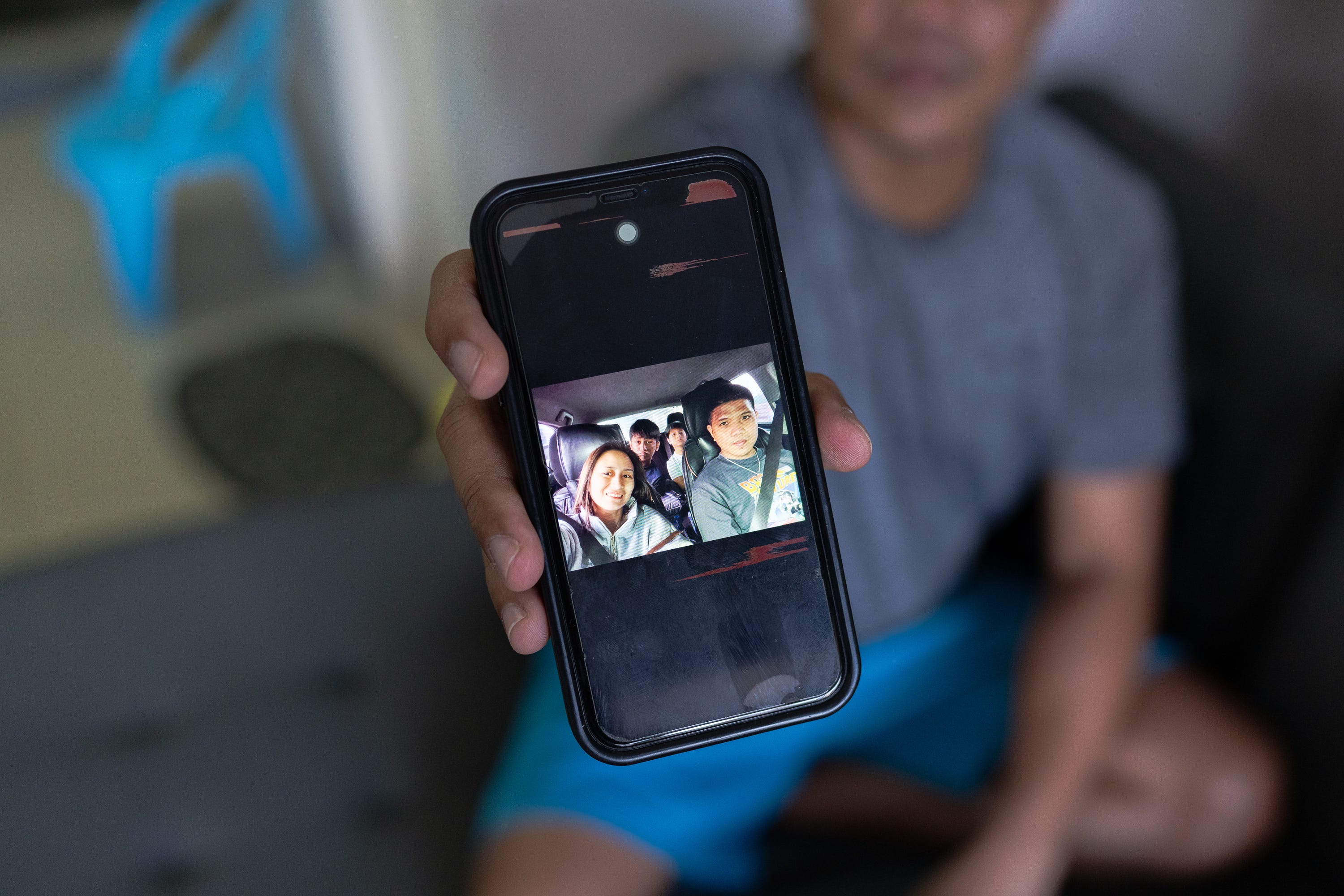

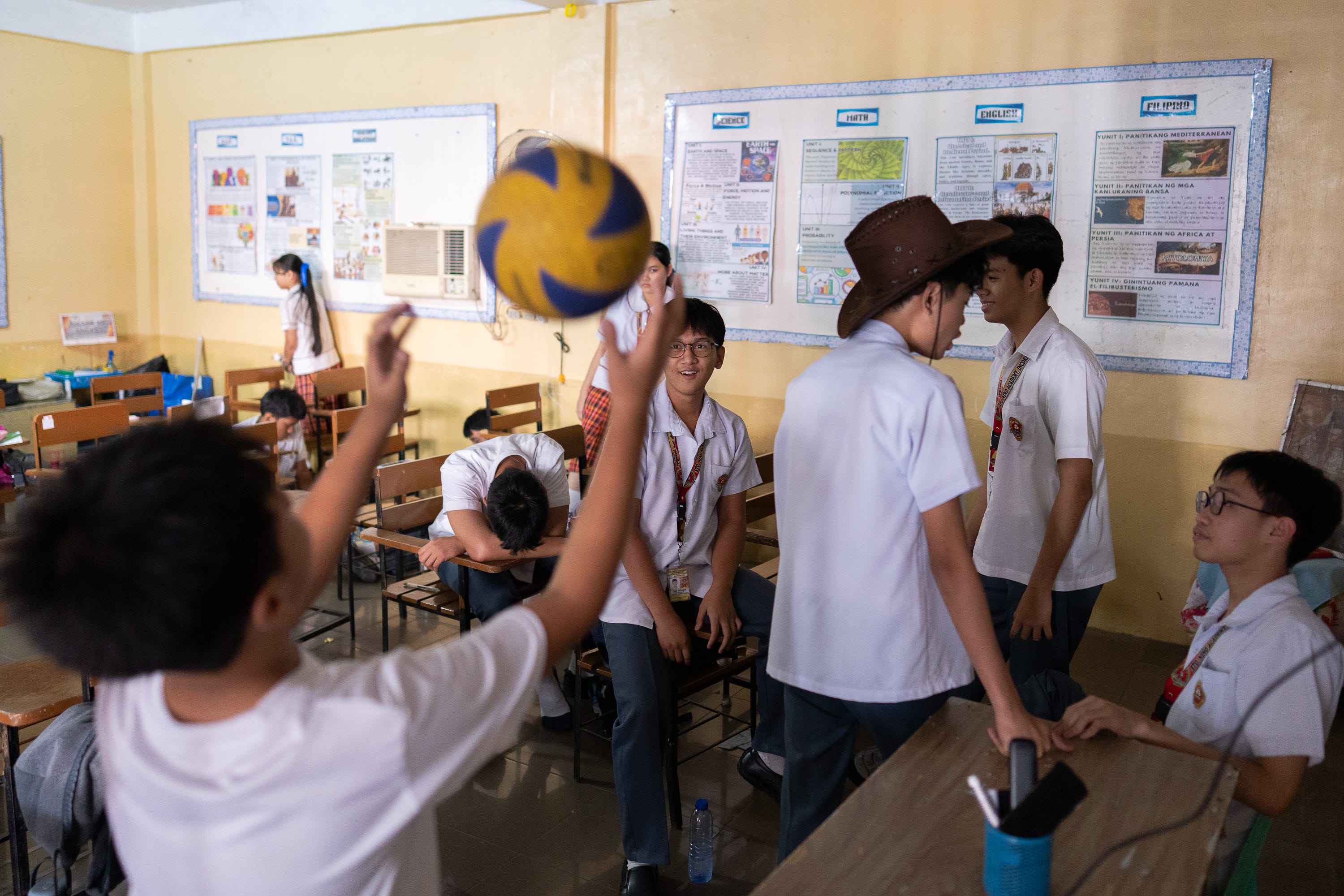
I went to the Philippines to see how children are shaped by migration, by having their parents absent. What do the actions of parents do to a child’s ambition, desire, sense of self? What do they do to their understanding of how they fit in the family, into the world?
I didn’t expect the story to be about migration’s impact on a family, on a marriage. But as Darwin confessed to cheating on Shiela, as I stumbled through that interview, surprised by his honesty, by the pain and regret and shame he shared so willingly, I knew the story needed to widen. I realized that, of course, kids aren’t the only ones who feel the distance, couples do too. That the actions of one affect every individual just as they impact the whole. I see it in my own family. I saw it in Darwin and Shiela’s. And I remember it as a child.
My parents didn’t fight often, and I remember when they did. Not just because they were rare but because they terrified me. My number one fear as a child was that my family would somehow come unglued, this unit that was the center of my world, my everything.
One hard patch I remember was when my mother, unbeknownst to my dad, had racked up tens of thousands of dollars in credit card debt, the poverty and violence of her childhood fueling a desire to buy my sister and me enough to convince herself it never happened, to always keep the kitchen stocked just beyond capacity because to not have three packs of Double Stuf Oreos or a fridge with four blocks of Monterey Jack cheese might mean we too would find ourselves eating muskrat. And as the unpayable dollars stacked up at the bottom of the bills, her shame at digging that hole, of finding this feeling that was so familiar, did too, and she secreted the mailings away, into a drawer, her purse, away, away, just keep it away.
And so months went by, a year, until finally that pile grew too big to hide or dismiss, and the fear and shame and despair curdled into anger as my father asked what happened, his surprise and confusion itself turning to anger in response to her own, this ping-pong of fear meet shame meet hurt ricocheting through the house.
Money. “What was this thing, really?” I wondered. So much fear and power there. And not having enough seemed like it could test the very strands of our family. And so I added it to my list.
Fear 1: No more family.
Fear 2: No more money.
And so my solution, that reaction of a nine-year-old, was to keep my footprint light. To not tax the system. Because if I could play out a little slack, then we’d be okay when things got tight.
And so back-to-school shopping became something to avoid, the circular racks of clothes at J.C. Penney became a place to hide, the cool fabric of unworn jeans and corduroys draping down around all sides, buffering me from the noise and the inevitable as my mom walked through the store calling my name, a pile of Bugle Boy T-shirts clutched under her arm for me to try on. And I’d wear down my skate shoes until the holes in the duct tape I had placed on the holes in my shoes began gnawing holes in my socks and my mom would come to my room holding the socks in her hand, laughing but annoyed that her kid felt so needlessly compelled to wear the shoes of her childhood.
And I would ask for things, don’t get me wrong, but whenever I did, that ask would be followed by guilt and a heavier weight still when I inevitably got it.
Children of parents. We so often want to do right by them. We want to be loved. We want to be protected. And we want to protect. And so we try to salvage what is fraying, to ease what is tense, these little empaths quietly, diligently reading the room, the emotions, the dynamics, asking ourselves where the levers are, and which ones will help us get what everyone needs.
And while the connection is direct in a family, the impact real, there is only so much a child can do to change its course. And over time, we realize, sometimes painfully, that we are each our own. That a father is a man, and like any other has his own ambition and pride and compassion and ego and trauma. And that a son is himself his own person, shaped by the family as he is by the world and his sense of place in it. That he is not anyone’s to own, and that he will do what he will do just as everyone does. And in that, the family is this paradoxical assemblage of intimate dependence and ruthless sovereignty.
Shiela and Darwin acted for the family. For themselves. For each other. And their children, Shelwin and Shann, acted in response to that, becoming different people in the process. Shelwin has become a young man at a speed it’s unlikely he would have, had Shiela stayed. He has taken on responsibility out of some sense that he should, to take care of his parents, to do right by them as they have tried to do by him. To keep the family balanced, happy, together. To bring his mother back. To save the world he loves.
And his attempt at this balance has been through the minimizing of his needs, the pride in his asceticism growing. And I could see myself in that act. And I could see my mother in Shiela, the way his austerity irked her, not aggressively, for she understood the reasons, but that didn’t stop her from wishing it away because provision was the language of love available to her from across the South China Sea, and what was she doing it all for if not to be able to give that love, material proof that her sacrifice was for a reason, that they were better off than if she’d stayed. And so when Shelwin mentioned offhandedly that his cologne was running low she called him the very next day from a Hong Kong mall, spending her one day off hunting through each shop, the video call full of her holding bottles up to the camera. “This one? What about this one? Or this one?”
But his family will not survive. Not in its current form. Mine did not either. The fractures were not ours to repair. The decisions not ours to own.
And yet the migration worked. The house, the car, the motorcycle, the kids in good schools, the money in the bank. This story is a success. And yet.
And yet like all choices, the decisions Shiela and Darwin made changed the very nature of their lives, and those of their sons, and these altered lives will go on shaping the people and places around them in a manner no one can predict or direct, the constant ripples of choice fanning out until they have touched everything, modified every part of this world in some small way.
My mother’s debt began long before the credit cards, in a small cabin in upstate New York rattled loose by liquor and fistfights, and it moved forward through the decades, shaping choice after choice, until it arrived in our mailbox, past-due notices stuffed deep in a drawer, a son hiding out amidst racks of Wranglers and JNCOs. And Shiela’s leaving began long before Darwin totaled that rental car. Before even the oil shock and hobbled economy that built the machinery of her departure, and it moved forward until it arrived in a small bed in Hong Kong, in the drawing books Shelwin skips lunch to buy, his face glued to their pages late into the night, phone light on in the darkness as if tunneling to a different world. These systems we try to balance are never closed, the force moving through them often starting long before us, ending long after us, running through families and time.
Even into this. For this story is one of those ripples. My life collided with the wake of their decisions and changed in ways I could not have predicted and cannot fully understand, because there is no final form for it to take, just a constant changing from what has already changed. And in some small way I am passing that on to you, this moment altered in your day.
And I want to tell Shelwin this. That the system was never his to balance, that no perfect report card, or skipped lunch, or broken phone screen was ever going to change what had started long before him, but I know that it would be useless, because he’s heard that before, his mother has told him just as my mother told me as she stood in my doorway with my ruined socks in her hand, laughing at a compulsion she could see so clearly and I could not, my fear finally given some job, some direction, the terror of a world coming undone converted into something small enough to hold. Because I heard her but I loved her and so I kept trying. Sometimes that’s all there is to do.