


The first thing you notice as you leave the airport in Dhaka is the people. They are everywhere. Exiting the sliding doors of arrivals you emerge into what feels like a disused parking lot and there, waiting for you behind a cordon enforced by roving airport security guards are hundreds, a mass of bodies, families craning for loved ones, touts scanning and calling for customers, dozens of taxi drivers waving frantically like some group of men marooned at sea.
Speeding down the elevated expressway out of the airport, dusty buildings and mildewed concrete skating past the window, it's easy to forget that scrum of people. But as you peel off the smooth tarmac and descend to street level the full tilt of the city comes into view.
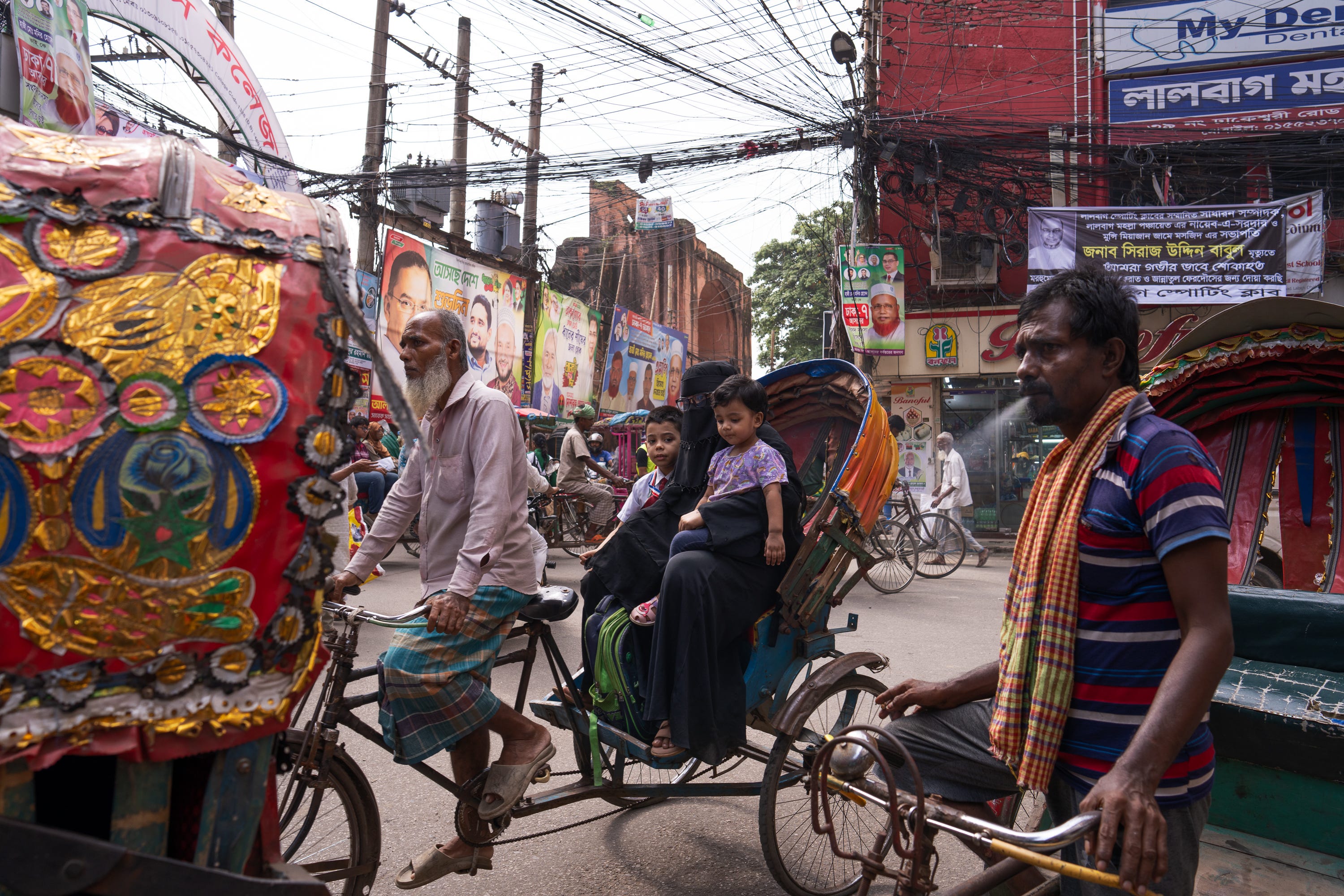
Flatbed trucks stacked high with towers of matte red bricks or hard shelled coconuts, motorscooters weaving between brightly colored rickshaws and spluttering tuktuks, people dangling from the sides as legs pump pedal bikes between the margins, sweat soaking through stained undershirts and patterned lungis. Overhead an entire nervous system of wire and cord tangles between concrete pylons, amassing in black dendritic nests of plastic and metal while underfoot everything is covered in a uniform gray patina of dust and soot and grime and human detritus forever accumulating, settling, sweeping up into the air and settling again and you wonder if that is just the color of things and the way they have always been, or if lines were ever sharper, the contrast deeper than the washed out dullness covering life with this flat weight. The air is sticky, alive, like hot breath connecting you somehow to the gurgling bodies jostling past as the exhaust and bodies and wheels and motion and noise and noise and noise build into a mass swarming and shifting and shaping around you as it honks and chokes and spews and shouts into the grip of meat and metal that “Yes I am here and I need space too because I live here too and I exist I exist let me live please let me live!”
The sheer numbers to Bangladesh’s story are mind numbing. Take more than half of all Americans and put them in the state of Iowa and you’ll start to approximate the scale and intensity. With over 36 million people, Dhaka, the capital, is the world’s second largest city and widely considered the most densely populated. In the city’s informal settlements, which hold millions, six live in a space roughly the size of an American parking space. The city is so dense, that if the entire country, again roughly the size of Iowa, matched its concentration it would be home to more than six and a half billion people.
The infrastructure has buckled under this weight. The average speed of traffic in Dhaka is just under three miles per hour and the city routinely ranks worst in the world for air quality. Nationally, nearly 42 million people, or essentially all of Canada, live in poverty.
To say Bangladesh has a lot of people is so beyond self-evident as to become meaningless, like saying the ocean has a lot of water. Bangladesh is people, its defining feature, its competitive advantage, its main export.
Life for the vast majority here is not something passive to choose from and experience. Life here happens to you, relentlessly. It is a force you try to outrun, feet pounding to keep pace, elbows thrown wide to hold space, to avoid being crushed by the hungry churn of it all.
It is no wonder then that more than a million people leave every year in search of better opportunity, often any opportunity, elsewhere. The scale is now so large that Bangladesh has quietly become one of the world's biggest labor-exporting countries, in the same league as the Philippines, the traditional heavyweight of formal overseas labor migration. It’s a vast outward flow, sustaining millions of families through channels both seen and secret, a lifeline that saves lives just as it exposes the country to some of its deepest vulnerabilities. Of the major destinations - India, the Gulf states, Malaysia, Singapore - Saudi Arabia is the biggest by far with close to three and a half million, accounting for nearly 10% of the gulf country’s population. Sajal Mia hopes to be one of them.
When I meet him, he is sitting on a tipped-over tree trunk beside the fish pond behind his house, the midday heat pooling around us. “Life on the road is full of pain,” he says as he stands, “but the more you encounter hardship, the more money you can make. You can’t make money without suffering in this life.”
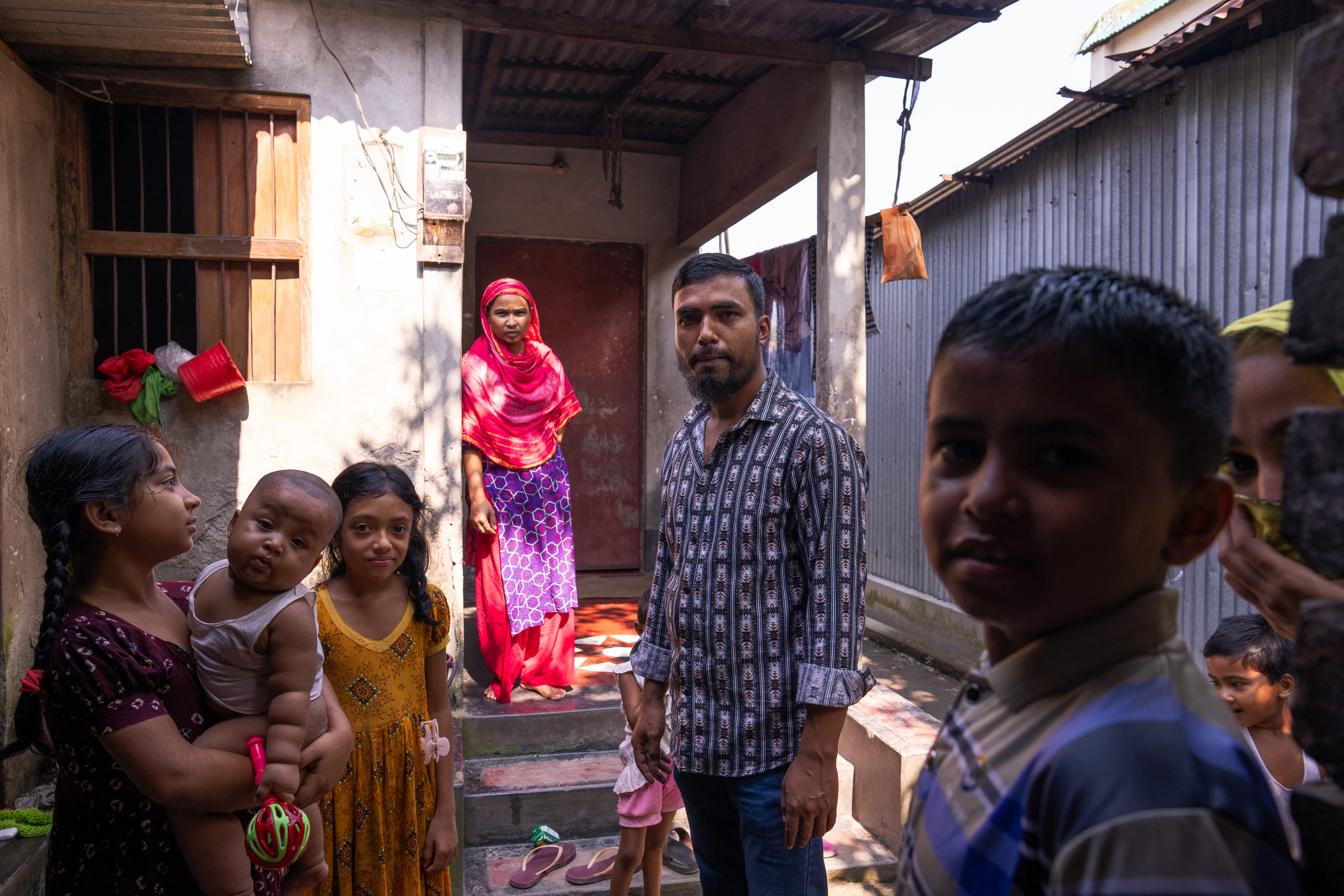
His seven-year-old son Abdullah stands as well, shifting closer to him by the edge of the pond. We’re a few minutes walk from his house in Jamtala, a small village outside Kishorganj in northeastern Bangladesh and the sun is hot, reflecting off the silty, tea-colored water of the pond. I continue to sit, giving space as Abdullah quietly says something and Sajal takes hold of his hand.
Sajal has the sort of open, boyishly handsome face that pulls you in. His cheeks and eyes do much of the work, his mouth turning ever so slightly up at the corners as his cheeks bunch upwards, and his dark, kind eyes glint with something alive, something that could be warmth or amusement. He feels immediately unguarded, presenting an openness that comforts. The warmth is real, disarming, but also misdirecting from how observant his eyes actually are, from the sharp intelligence that’s reading the moment. It is only when he really smiles that you realize this, realize you were always on the outside. For when he does smile it is genuine and full, his eyes crinkling in delight just as his whole face opens up, the tip of his tongue peeking out between teeth that are slightly stained from the cigarettes he sneaks behind the house so Abdullah won’t see him, and from the betel nut he occasionally chews. It’s a smile that gives you everything, the confidence, the wear, the small vanities and compromises that make up a life. You see the 34-year-old man who lost his father when he was one and started working to help his mother as soon as he could stand, who worked for thirteen years as an office assistant fetching tea and cleaning dishes, who holds hands with his son nearly everywhere they go and who takes a machete to a green coconut with three clean strikes, no hesitation or wasted motion as the blade bites through the tough husk. When he smiles, you trust him completely just as you realize you’ve been duped.
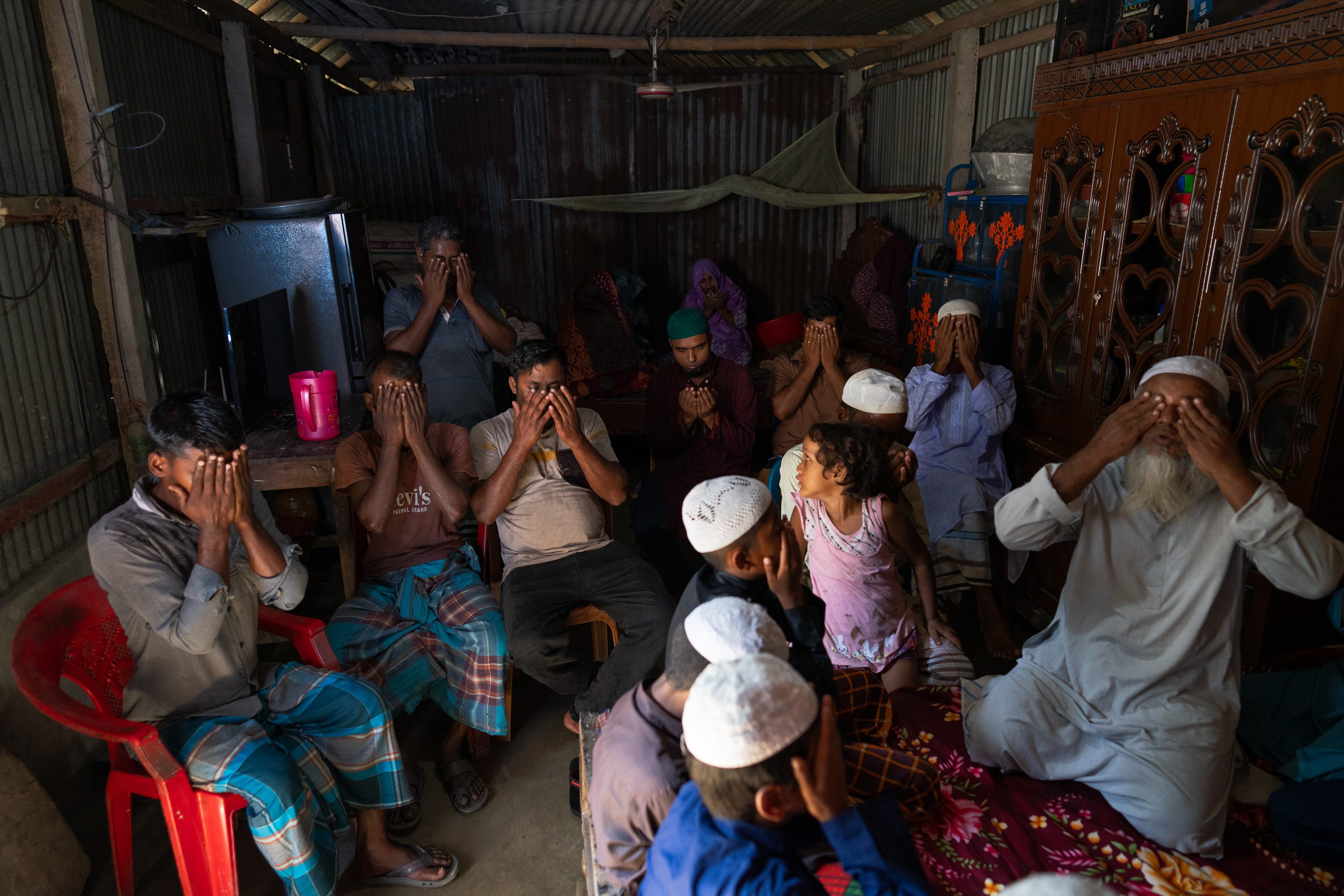
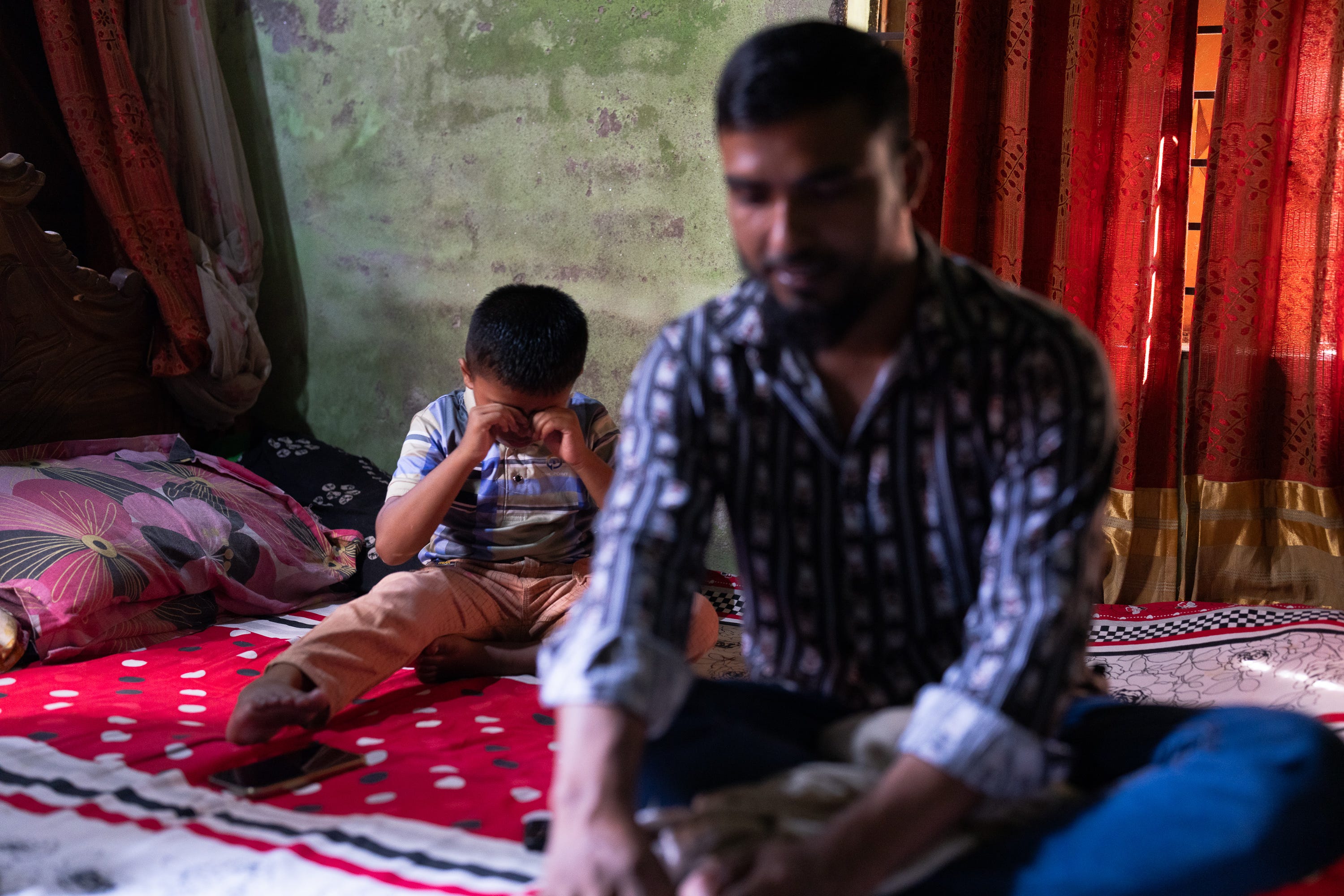
Sajal is two days away from leaving. Leaving Abdullah, his pregnant wife Mumtaz, his mother, the house he has grown up in, the plot of land that has been home to his family for more than a century.


Joining the more than 60,000 men and women who leave for Saudi Arabia each month, Sajal will work for 10 hours a day, 26 days a month, assembling furniture. His days will be spent hunched over stacks of cheap particle board with a drill in hand, inhaling the fine wooden dust as he tries to keep thoughts of home at bay.
I stand up from the tree trunk and walk up beside Sajal. Beyond the pond are a few small rice paddies, a rare acre or two of land without houses or people or cars. A large road cuts behind the far end of the paddy and we can hear buses and trucks grumbling past as they grind through gears. Two others, young men Sajal has watched grow from birth, sit nearby with simple bamboo fishing rods in hands, drifting in and out of a quiet conversation as they flick their lures into the water and wait. A woman, fully clothed, and her small daughter bathe in another pond behind us. The girl stands, submerged to her small thighs, and stares uncertainly as her mother steps into the deeper water and dips below.
Sajal and Abdullah quietly exchange a few words in Bengali, but I can see Sajal’s focus is broader, soaking in the fields, the pond, this community of his around him.
“Will you miss it?” I ask, raising my chin slightly towards the field beyond.
“Yes. Yes of course,” he says, turning to face me fully, “I will miss so many parts of life here. But to gain something I must lose something.”
He pauses, contemplating whether to speak like this in front of Abdullah, and then continues, “Here, even with the struggle of everyday life, I get to come home to my wife and mother and son. There I won’t get that chance. I will lose all of this. I will lose time and I will never get it back.”
This loss is not unique in his family. Sajal’s father-in-law worked for more than a decade in Dubai, his brother-in-law spent 14 years in Malaysia, he will travel to Riyadh with another brother-in-law, a man named Alamgir, and they will join his cousin who’s been there for three years already. His hope is to bring his nephew over after a few years.
Abdullah becomes restless, the moment fades and we decide to walk back to their home.
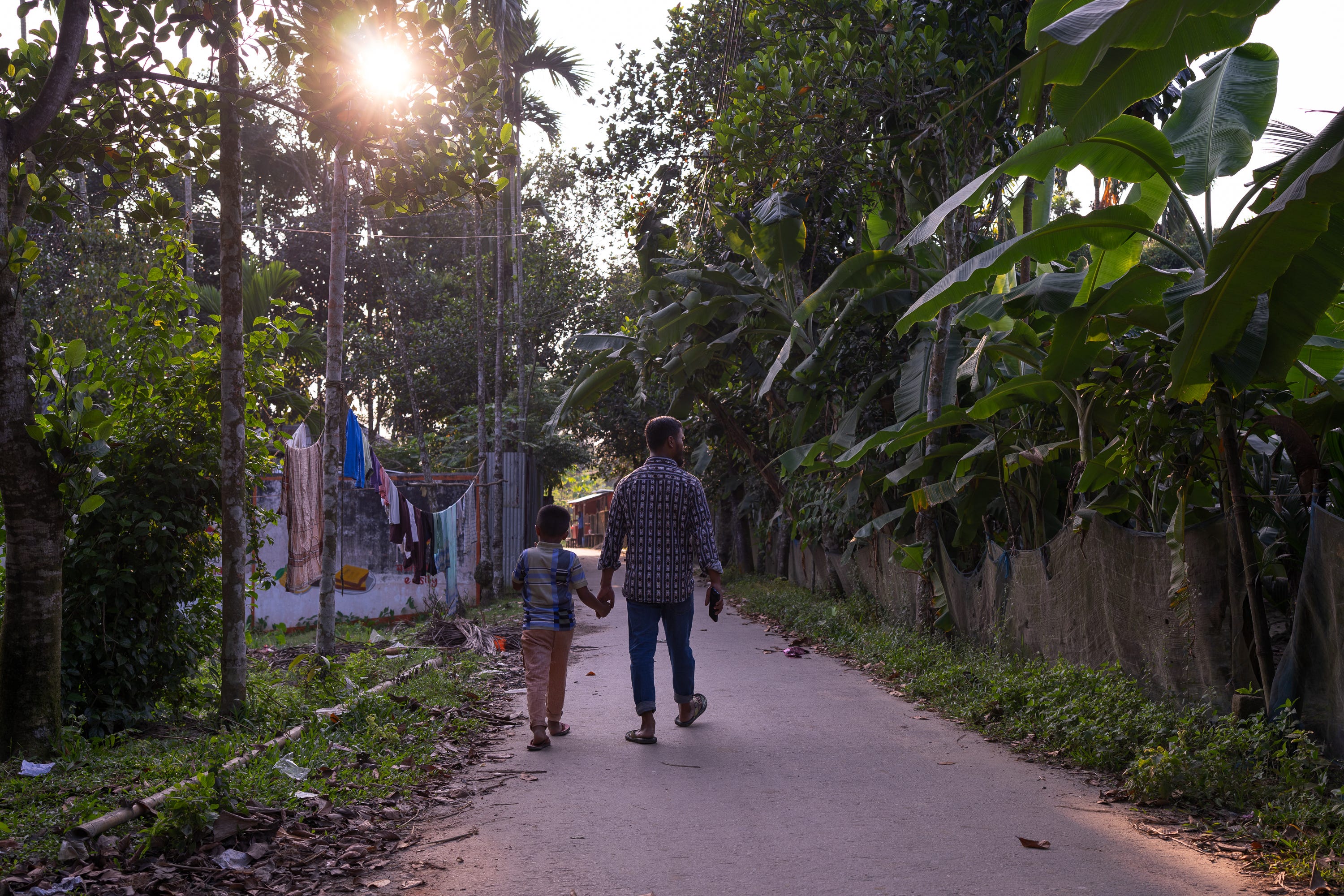
As we walk through the village Sajal is stopped by various friends and after every exchange Sajal tells me about their family members abroad, people in Jeddah, Kuwait City, Singapore, Jakarta, the list goes on, all working to send money home, to stash enough to return and begin again, begin better. Nearly every doorway Sajal passes tells its own version of what migration can unlock.
The impact of these jobs on families is transformative. With disposable income coming in, families invest in their homes, installing tin roofs and cement floors, education, farming equipment and high yield agricultural inputs. With enough capital many go on to invest in a small business, building an economic flywheel that can generate revenue long after they have returned. Health outcomes improve as families can afford medical care and better nutrition. Children stay in school longer. The examples are countless in Jamtala. Sajal’s brother-in-law, Jalal, for instance used the money he made in Malaysia to open a small kiosk in the village. His father-in-law invested some of his savings from Dubai into a chicken business he now runs. Those businesses they’ve started now put their children through good schools and have helped sick family members get better. For Sajal, his hope is to make enough over the next six or seven years to buy back two pieces of land he sold to cover the cost of his son’s birth and to start a small clothing shop. Across millions of villages, remittances reshape family life like this, and together they form the quiet financial architecture that Bangladesh increasingly depends on.
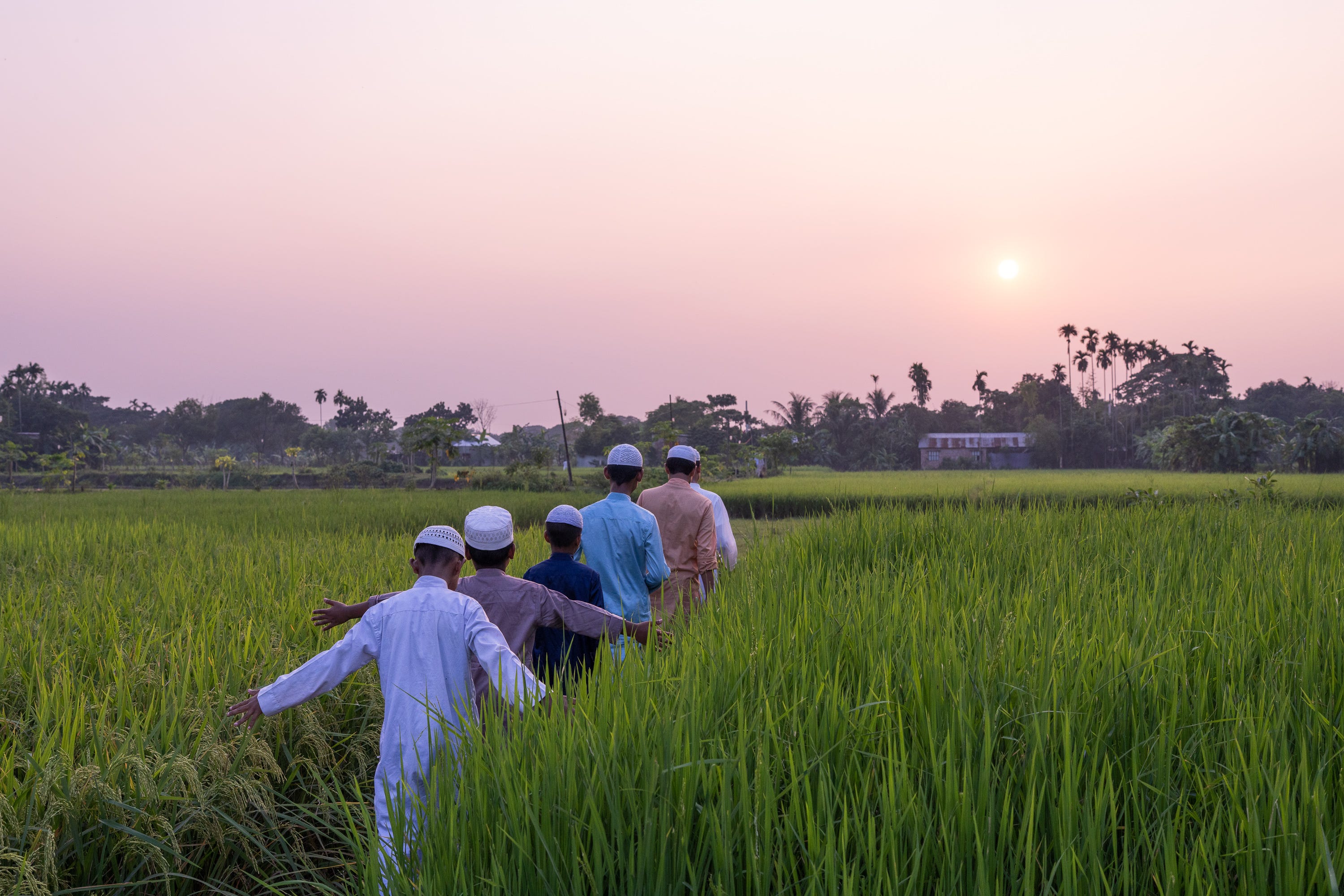
In Bangladesh and many lower-income economies, weak financial institutions and high collateral requirements make it nearly impossible for low-income workers to borrow the money for such businesses. The result is tens of millions toiling in cycles where they scrape by each day with just enough, never able to save and build something generative. It’s a dynamic the development sector has long sought to address.
As Dr. Zahid Hussain, the former lead economist for the World Bank in Bangladesh, told me, “for poor people with no collateral, the only option they have is to form a group and get microcredit. Otherwise, there is a void, there is a missing middle as you don’t have access to finance. If you want to become an entrepreneur, you first go abroad, you accumulate savings, you come back, you invest.”
In 2024 the World Bank published a paper showing that while migration costs for Bangladeshis are high, often more than 2.5 times annual household incomes, the total earnings abroad average more than 9 times that initial cost. Nearly 60% of returning migrants surveyed were running their own business, compared with just over 20% for those who never left. With loans for migration costs more accessible because they’re backed by work contracts, migration has effectively become how people get business loans.
“They don’t see any other option of generational mobility,” Dr. Hussain says. “If they stay here, they will just barely make a living, if at all. Even a master’s degree holder might be a rickshaw puller or a bank teller.”
The impact on the country is hard to overstate. Last year, Bangladesh received a record $32.8 billion through official channels alone. “At a macro level, remittances are the strongest pillar of stability,” Dr. Hussain says. “Without question, Bangladesh’s most important export is people.”
These flows dwarf every other source of foreign exchange. While Bangladesh’s garment industry is often celebrated as the engine of the economy, remittances bring far more foreign currency into the country on a net basis. “The garment sector produces $40 billion in exports,” Dr. Hussain explains, “but after accounting for the cost of imported inputs, the net is only around $12 billion.” Remittances on the other hand arrive as cold hard cash.
The scale extends to employment. Bangladesh’s garment factories employ about four million workers, while nearly nine million Bangladeshis work as temporary migrants abroad. And over the past three years, at least half of all new entrants to the labor force have left for work overseas.
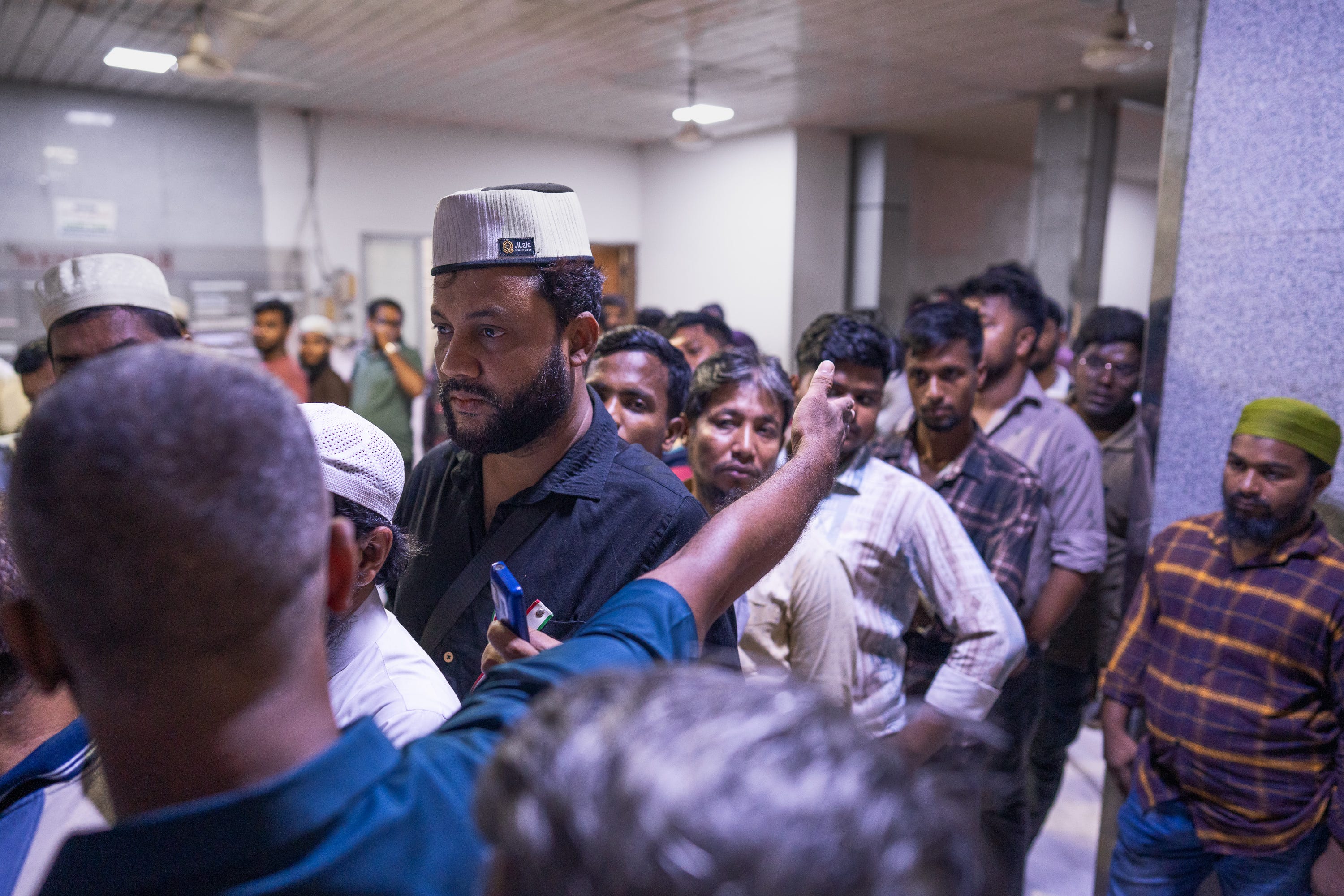
“Migration is a safety valve,” Dr. Hussain says emphatically, “Can you imagine what would happen if this option did not exist? Half of the young people entering the labor force have to go abroad to find a job. If they stayed here, the labor market would have no way of accommodating them.” What Sajal is stepping into isn’t just some personal gamble, it’s the same safety valve the entire country depends on and the same one that makes Bangladesh so exposed when it falters.
That fragility was on full display in July and August 2024, when long-simmering economic frustrations, especially among young people, erupted into nationwide protests that were met with a brutal police crackdown. Over three weeks, as many as 1,400 people were killed and the government collapsed, with Prime Minister Sheikh Hasina ultimately fleeing by helicopter.
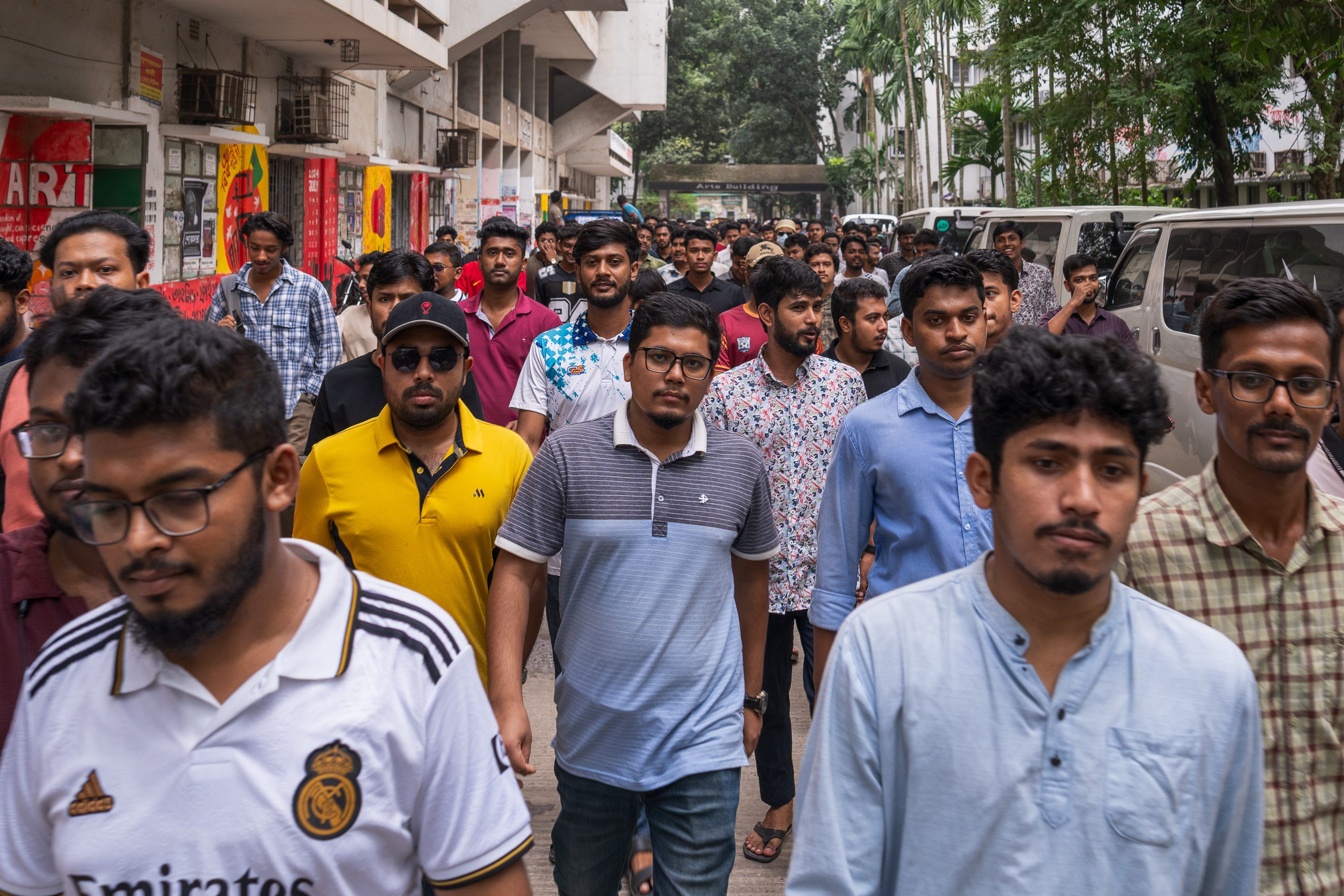
While the administration may have changed, the forces that will determine its success are the same. The migration pipeline, the remittance lifeline and the foreign reserves they are meant to bolster.
Dr. Fahmida Khatun, a prominent Bangladeshi economist and Executive Director of the Center for Policy Dialogue, was clear when we spoke recently, “This next government’s success will largely depend on how they manage the migration economy and facilitate remittances. They will need to give youth opportunities but also ensure they have foreign reserves to spend.”
Yet even this lifeline is only partially visible. Much of the money these migrants send home moves through informal channels and remains uncounted in figures like last year’s $32.8 billion. In 2022, Bangladesh’s then Finance Minister estimated that nearly half of all remittances - tens of billions of dollars - travel through hundi, South Asia’s version of hawala, a trust-based informal transfer system rooted in medieval trade routes across South Asia and the Middle East, where merchants settled debts across vast distances without physically moving money. “I don’t think it has changed,” says Dr. Khatun when speaking of the percentage of remittances transferred through hundi, “it is still about the same as formal (channels)”.
The explanation is simple. For migrants, hundi isn’t just convenient but often essential. The rates are better, often paying .5 to 1 taka more per dollar than banks. Transfers happen in hours, not days. And it requires no formal documentation. No bank account, no proof of address, no questions asked.
For workers like Sajal earning $400 a month, these differences matter. An extra half-taka per dollar means dozens more meals for his family. The speed means his wife can bulk-buy rice when the price is good. And accessibility means the system works for the millions of Bangladeshis who don’t have bank accounts.
But before any remittance can be sent, formally or informally, a worker must first buy their way out of the country.
“Getting to Saudi Arabia is its own ordeal,” Shariful Hasan, Associate Director at BRAC, Bangladesh’s largest NGO, and head of its Migration Programme, told me from his office in Dhaka, “Bangladesh has the highest migration cost in the world”. While the official government-mandated cost should be a little over $1,300, migrants pay significantly more, often between $3,000 to $8,000. The entire recruitment system runs on bribes and under-the-table payments through layers of middlemen connecting rural villagers to Dhaka-based agencies, who purchase work slots from Saudi employers. The corruption extends to the highest levels with Saudi embassy officials in Dhaka even being arrested for taking millions of dollars in bribes. “The whole recruitment system from Bangladesh to Saudi, it has been corrupted,” Hasan says.
The industry has ballooned to more than 2,700 registered agencies, many sending workers through fraudulent visas, who then arrive to find the promised jobs nonexistent and end up in abusive informal arrangements or rounded up by Saudi police. Over 45,000 were deported in 2024 alone, returning empty-handed with crushing debt.
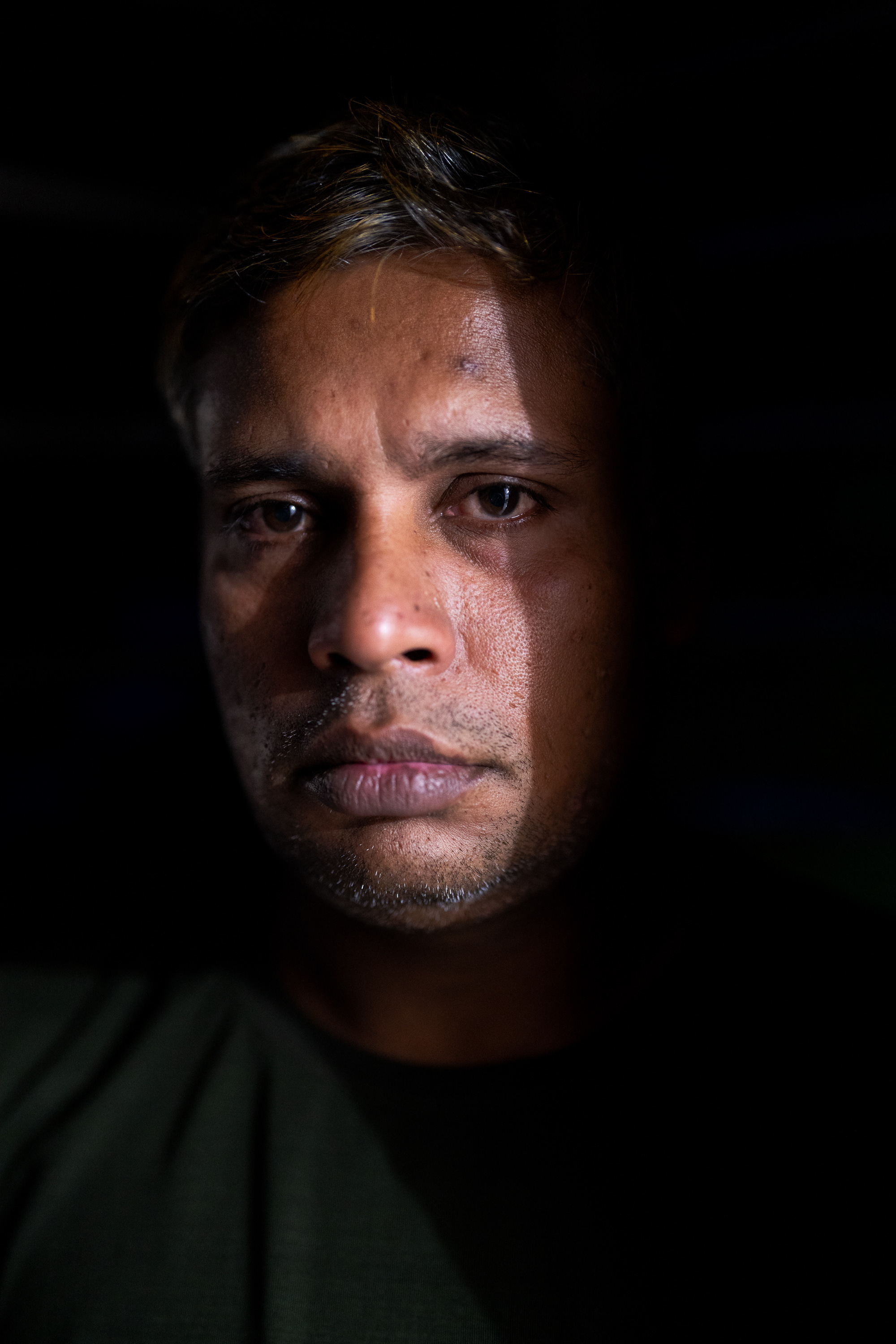
One was Mohammed Delwar Hossain, who I met in the town of Narsingdi just after his deportation. For months he’d survived in Saudi Arabia on odd jobs with employers who used his desperation as leverage, until finally the police found him. He returned with nearly $4,000 in debt, a sick mother who needed care, and a shame so thick and knotted, a self-loathing and guilt and dread so clenched and electric with panic that he could barely meet my eyes. He thought about suicide daily, he said, the words delivered so flatly they sounded like directions, just another mundane piece of navigating this new life he found himself in.
For his own part, Sajal’s visa, bribes, and paperwork cost him $3,000 or three years’ worth of his $80 salary. His job comes through another loophole, a three-month contract with a company he’ll never work for, an arrangement the furniture factory has set up so he can arrive and transfer over. He feels good about it, but the exposure is substantial. If something goes wrong in Saudi Arabia, the debt will ruin his family.
For his brother-in-law, Alamgir, the stakes are even higher. He carries the same $3,000 debt for the job plus another $4,500 he’s accrued over five years as his business collapsed. For him, Saudi Arabia is a lifeline to keep from drowning.
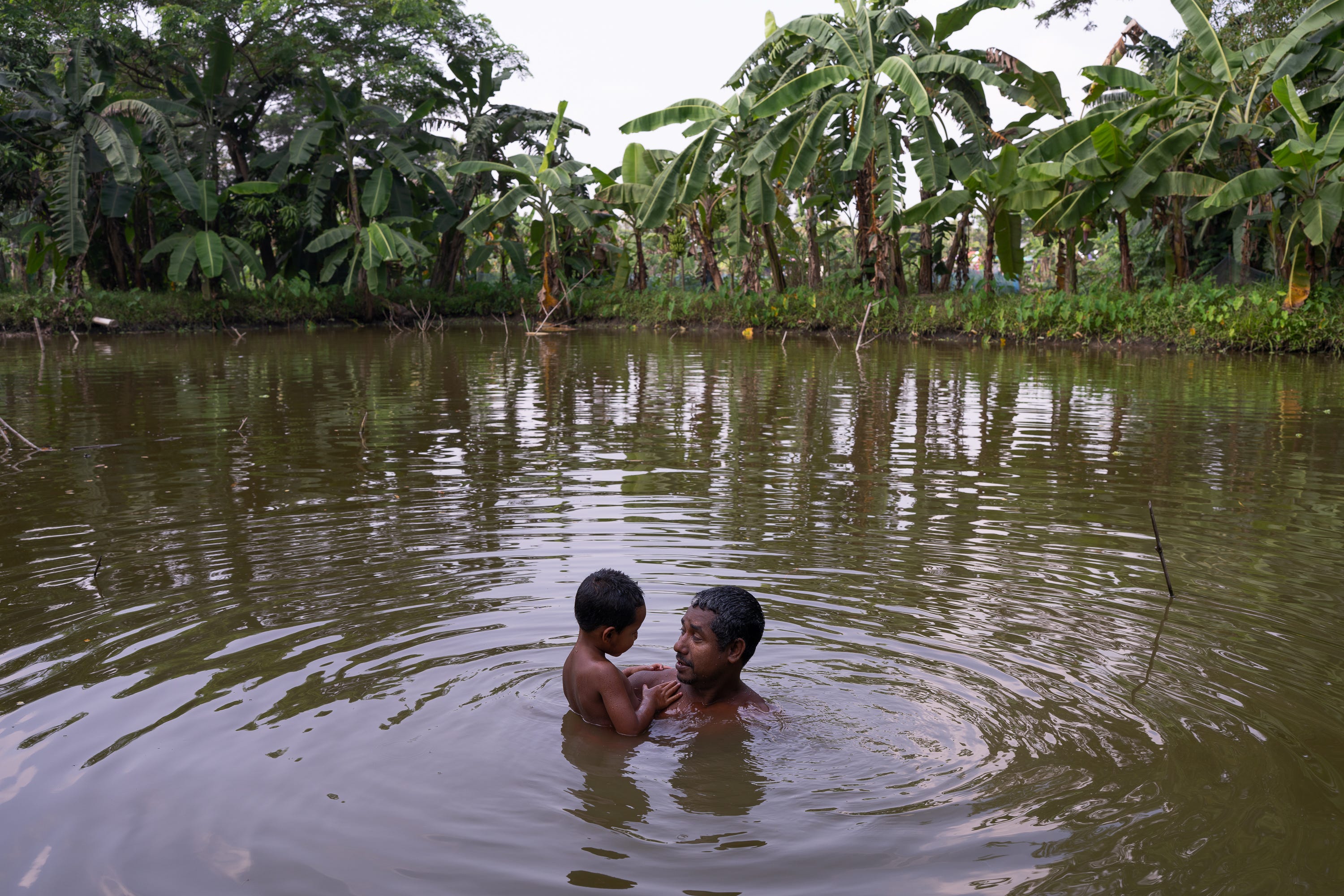
Sajal’s money came together slowly, painfully, borrowed from relatives, from two microfinance organizations, from a neighbor who is friends with his mother, a community chipping in what they can to support the hopes of another.
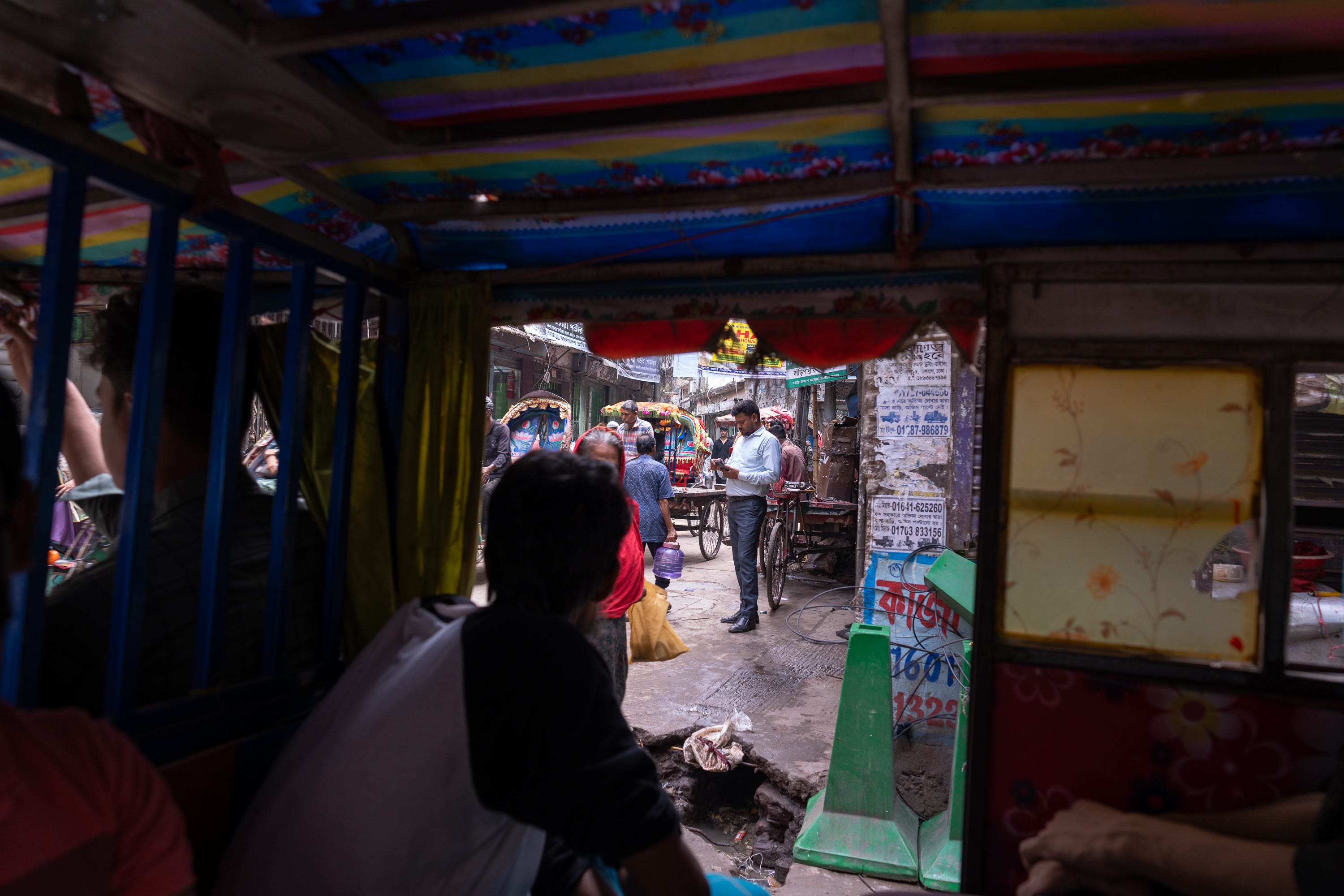
When he finally has the full amount, Sajal travels to the recruitment agency’s office in Dhaka, a cramped third-floor walk-up in a building in Dhaka’s Naya Paltan neighborhood that’s home to thousands of similar operations.
Karim, the recruitment agent who has been handling his case, counts the cash carefully. Twice. Then once more, licking his fingers to keep them moist as they flick through the bills. He separates it into different stacks. One goes into a drawer, his commission and the agency’s fee for pushing paper and their requisite sweeteners here in Dhaka. But the larger pile, nearly half of what Sajal has brought, stays on the desk.
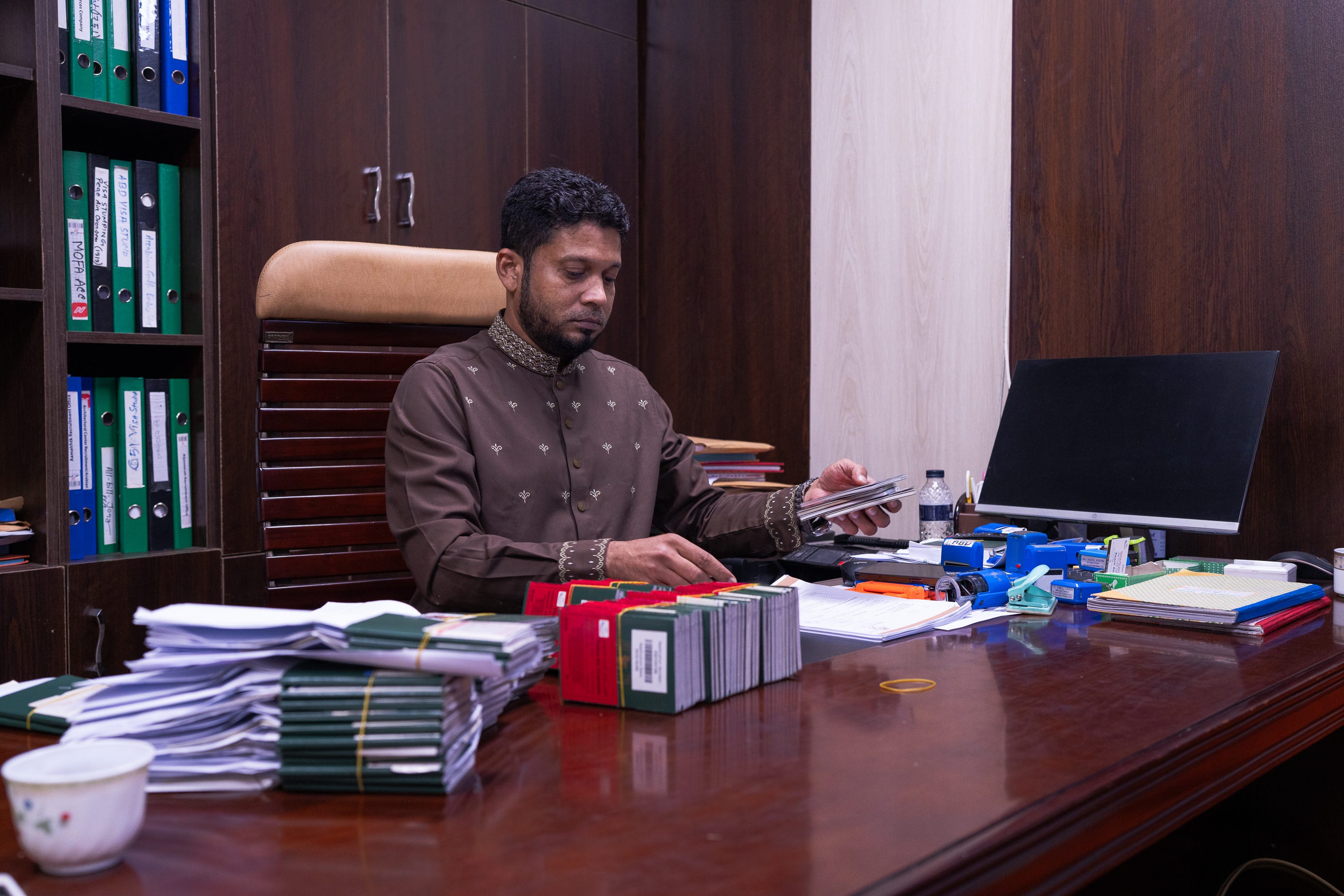
“For Riyadh,” Karim says simply, not looking up as he bands the bills together into chunky bricks.
Sajal knows what this means without Karim spelling it out. Bribes for visa brokers, payments to Saudi middlemen who grease the wheels, money for men whose names he’ll never know who are making calls and pulling strings thousands of miles away. Money that will never show up on any receipt.
After Sajal leaves, Karim sends a series of messages to men in Dhaka and Saudi Arabia, confirming amounts in Riyals, providing names and codes. Within minutes, men in Riyadh will receive their payments, not through any bank transfer that could be traced, but through hundi.
Sajal doesn’t need to understand how this works. He just needs to show up in Dhaka in a few weeks, collect his plane ticket to Riyadh and hope the job is waiting for him like Karim has promised.
The men Karim messages are part of a network that operates across dozens of countries, moving hundreds of millions of dollars daily. At its center are men like Babu (whose name has been changed to protect his identity).
Babu is a three phone kind of man, a neat little black brick of electronics on the table in front of him if not for the fact that he always has one, more often two, in his hands. Babu is a man at odds with time, always trying to squeeze the last bit of juice out of every minute. He starts answering your question before you can even finish asking it, quickly tapping out two or three messages as he speaks, pausing midway through to send a voice message, he then stands and sidles away to take a short call, speaking loudly, unselfconsciously for all to hear. He sits back down and sips from a soup he has taken from the restaurant buffet, still speaking as he spoons the broth down his throat. At no more than five foot three he is a hummingbird of a man, his focus and body always moving, a highly sprung intensity to every movement.
It’s 9pm and we’re seated at a hotel restaurant in Dhaka’s Naya Paltan neighborhood. A small army of waiters in bow ties and black suit vests ping pong between tables draped with white tablecloth, never farther than a few feet, waiting like ballboys on a tennis court to step in and serve more when the food on your plate or the tea in your cup gets low. The restaurant is full, an echoey din that competes with the honking city outside.
Like all cities, Dhaka runs on connections. Access is power, power is money, and money is access. Babu is a man at the center of all three.
“I’m just a businessman,” he says slurping more soup as he talks in a rapid fire stream of consciousness that defies grammar and punctuation and any attempt to keep up, “I move money that’s what I do so I do business with whoever needs to move money families businessmen migrants poor rich young old whoever”
He holds up a phone to me mid-sentence, showing a WeChat message with someone in Guangzhou, then flicks over to another chat with someone in Riyadh, “These are people I’m helping right now,” he smiles. A businessman in trouble. A migrant worker sending money home.
In Bangladesh it is nearly impossible to send money abroad. Citizens can send up to $12,000 a year outside the country with the exception of medical or educational expenses. These exceptions, however, come with endless bureaucracy and strict caps that are rarely high enough for many to meet their needs, and so hundi becomes the only solution to cover a brother’s cancer treatment in Istanbul or a daughter’s university fees in Boston. For businessmen, politicians and the well-heeled looking to stash funds abroad, hundi is the only option. And so while people like Babu may be considered just a businessman in other countries, in Bangladesh he is a power broker.
Six other men suddenly appear at our table and sit down around us. I have no idea who they are, where they have come from, or how they are related to Babu but to stop and ask would be to change the mood, as if demonstrating the laws of quantum mechanics and change the very nature of this friendly get together simply by observing it.
Babu flits between conversations with some of the various men and I take a sip of my coffee, wincing at the instant coffee’s bitterness. I turn to my fixer, Shehab and remark on the coffee while giving a quick raise of my eyebrows at our new guests. He smiles, gives a subtle nod that we’re good and gestures for me to pour some coffee in his cup.
“Sending money abroad is a constant here,” Babu says in an unbroken stream as he turns back from his men to me, “That demand doesn’t change you see whether you’re a politician or a regular person everybody needs to send money abroad so it’s very simple do you get it I have a network of people you know my associates outside the country and we move money without needing to actually move any money.”
The mechanics are indeed surprisingly simple. Say a Bangladeshi worker in Riyadh needs to send money home. He hands Saudi Riyals to one of Babu’s contacts there. Babu gets a message with the amount and the recipient’s name in Bangladesh. Within hours, sometimes minutes, one of Babu’s foot soldiers here, a man running a kiosk or money exchange shop in the recipient’s village, hands over the equivalent in Taka. Increasingly frequently this last mile moves via mobile money transfers.
A key aspect is that no money actually crosses borders. The Riyals stay in Saudi Arabia. The Taka is already in Bangladesh. It’s just information that moves, just messages between operators and a big black book keeping track of who owes what to whom.
“We always give a little more than the bank,” he says as he flicks between messages on his phone, “If the bank is giving 125 taka a dollar we’ll give 125.5 so the spread isn’t much but if you’re poor it matters and the rich do it because they have to and if you have an emergency you need it now and this is the way to get money now like right n...”
He looks down at his phone mid-sentence and answers, standing up as he listens and gestures with a tilt of his head towards the door, that he’ll be back, and walks out.
What makes the system work is trust and reach. Babu isn’t working alone, he’s part of a web of independent, overlapping networks. In Bangladesh alone there are dozens of separate operations, each with their own operators managing their own contacts and foot soldiers across the country.
These foot soldiers are the system’s foundation. Men running kiosks, fruit stalls, or money exchange businesses in villages and towns, collecting cash and doling it out, maintaining the personal relationships that make the whole thing work.
When they need to move money beyond their own contacts, they tap into larger operators in places like Singapore and Dubai, Jakarta and Kuala Lumpur, the clearing houses where accounts get settled across continents. A network in Dhaka might use a central hub in Dubai to balance its books, and another in Singapore for another large transaction.
These people abroad aren’t bosses dictating terms, just bigger operations with more contacts, more volume. It’s less a pyramid than a nervous system. Independent networks interlinked through nodes, each operator connected to others through mutual dependence and a shared agreement that trust is the currency and a word is bond, just as we all agree that a dollar is worth a Snickers bar.
Waiters circle. Nearby a large table of men in suits and tailored panjabis talk loudly, occasionally rising into shouts. A man sits confidently at the head, legs splayed wide to cradle his belly as it overflows onto his thighs. His eyes bulge from his face as he occasionally barks orders, his jowls and neck, mottled from a diabetically rich life, tremble with each command. He is clearly someone and I turn to Shehab who tells me he’s a longtime MP with the Bangladesh National Party - one of the country’s main political parties.
The restaurant, a few minutes from Babu’s office and his regular spot, is also next door to a BNP party headquarters, and like real life the distance between politics and money, access and power is non-existent here.
Babu walks in, looking at two phones now, and begins where he left off. “You got everything? Say a Bangladeshi guy needs an operation in Singapore his family gives my people here money and I tell my people in Singapore to give him that amount in Singaporean Dollars and it’s done in minutes or 12 hours max for really big amounts.”
On any given day, Babu will send anywhere from $150,000 to more than $500,000 criss-crossing borders.
The hundi network that operators like Babu run serves two opposing clients, in turn creating one of the more striking contradictions in Bangladesh’s economy. On one hand it’s a financial lifeline for millions of families like Sajal’s who are simply trying to eke out a better life. On the other it’s the primary mechanism that enables capital flight and drains the country of foreign currency.
When Sajal hands Saudi Riyals to a hundi operator in Riyadh, his family receives Taka in Jamtala within hours. But that foreign currency he and millions of others have earned - the Dollars and Riyals, Dinars and Euros that should be flowing into Bangladesh’s banking system, building up the country’s foreign exchange reserves - never arrives. Instead, it stays offshore, sitting in operators’ foreign accounts within networks like Babu’s that stretch to Singapore and Dubai. Those accounts become a vast, unofficial reservoir of foreign currency, disconnected from any central bank, government oversight or national ledger.
That reservoir is exactly what Bangladesh’s elite need.
When a corrupt official in Dhaka wants to buy a new condo in Dubai, or a businessman needs to stash undeclared cash in a Singaporean bank they can’t use banks, for those transactions leave trails. So they visit a man like Babu with a suitcase full of Taka, who takes the cash with a smile and makes a call. His counterpart abroad, the same person who just received Sajal’s Riyals from Babu’s network in Riyadh, uses that same foreign currency to secure the Dubai condo, the Singapore bank transfer.
Sajal’s family gets their Taka. The corrupt officials get their foreign assets. But the foreign currency that Sajal earned is captured mid-flight, redirected to serve the capital flight of the ultra wealthy and corrupt.
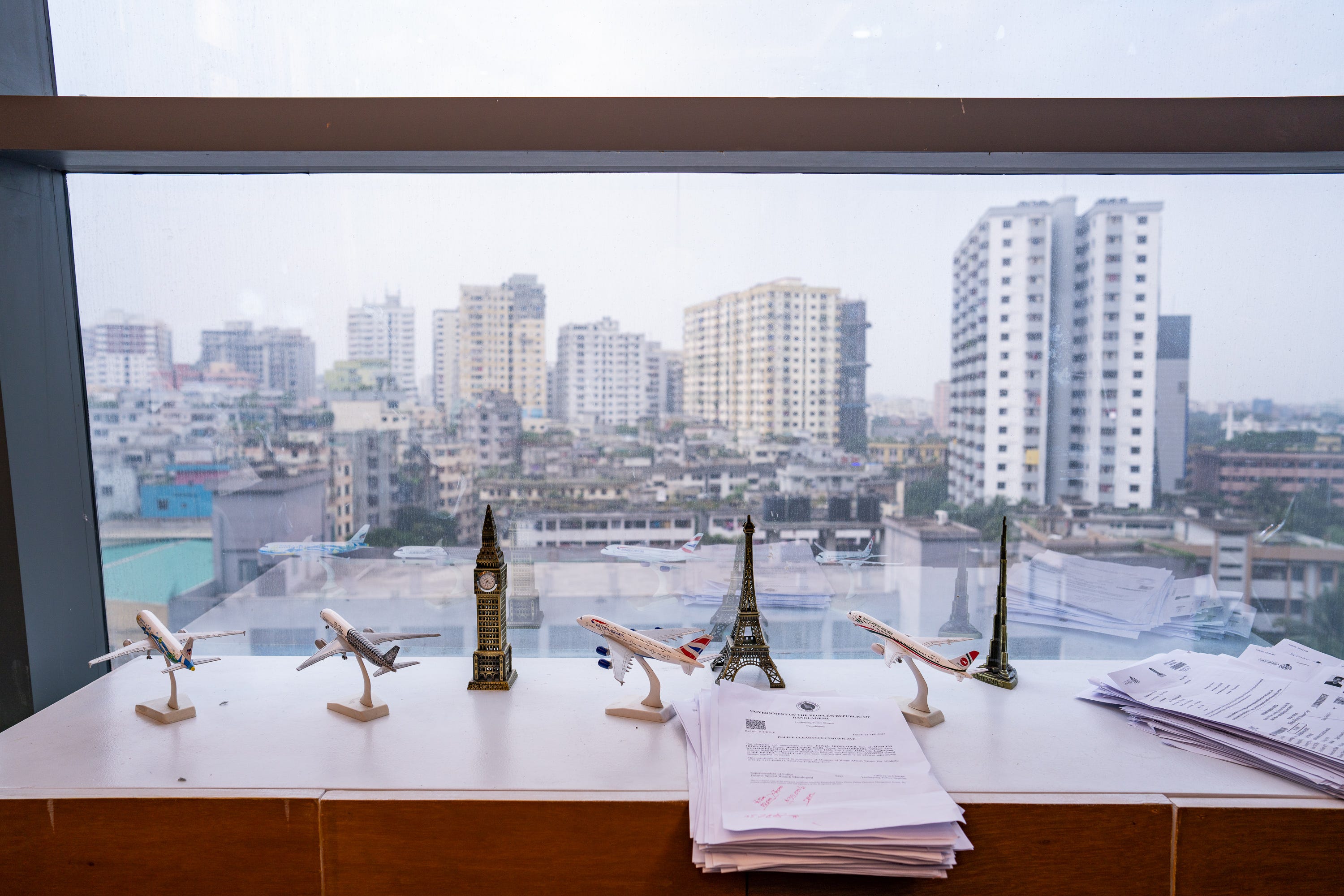
The scale is staggering with a recent government white paper estimating that as much as $234 billion was siphoned out of Bangladesh, primarily via hundi, during the previous regime's 15 year rule, a finding later featured in a Financial Times documentary.
The sacrifice of workers like Sajal, the blood and tears he’ll spill into his work, the years of distance that will grow between him and Abdullah, the debt he’ll spend years repaying, the birth of his second child that will happen thousands of miles away, all of it creates the infrastructure, the very pot of cash, that allows those running Bangladesh’s grueling factories and raiding the country’s coffers to move their billions abroad.
This isn’t some abstract loss, but rather shows up directly in the state’s ledgers. “We were losing foreign exchange reserves of $1 billion a month after fiscal year ‘21,” Dr. Hussain explains, “We had $48 billion of reserves at that time, and in two years that declined by more than $24 billion. Bangladesh’s Bank had to support the demand in the market, and there was no other source.”
Surging post-COVID import prices drove this drain, but it was so dire because the remittances that should have been replenishing the reserves were being captured by hundi, never reaching the banking system. In effect, by trying to live off its migrants, Bangladesh has, through neglect and design, created conditions where those same migrants are forced into a shadow system that guts the nation from within.
The government understands this and has recently begun offering incentives such as a 2.5% bonus for using formal banking channels, issuing public statements about crackdowns, and even running a face-saving raid or two. But they’re trapped in an impossible bind. A genuine crackdown would not only make enemies out of the rich and powerful who rely on hundi to stash their wealth, but also cut off the financial lifeline for millions of rural families who depend on the system’s speed and accessibility, triggering household-level crises across the countryside and potentially sparking the kind of unrest that brought down the previous government. So they tinker at the edges, hoping to lure transactions into formal channels without destroying the informal ones. Meanwhile the bleeding continues.
Dawn has just broken as Sajal and Alamgir get into the car. They arrived in Dhaka the day before and are on their way to the airport. The city is slowly waking and we weave through a light flow of rickshaws and men pulling wooden carts stacked high with the rubbish they’ve collected overnight.
Sajal and Alamgir are chatty in the backseat, their nerves and excitement palpable as they wonder aloud about navigating the airport, how it will feel to fly, and whether they will get sick. I explain check-in and security and reassure them that there is a bathroom on the plane, the two of them laughing in the backseat as they question the mechanics of a sit-down toilet instead of the squat toilets they’re used to.
We merge onto the expressway and pick up speed, our chatter and excitement quieting as the car settles into a steady hum.
A few minutes pass as we each recede into thought.
Looking behind me, I see Sajal staring out the window and I can’t help but ask what he’s thinking.
“I’m thinking about all of this,” he says, sweeping his hand across the life speeding past outside, “these are the last hours I have here for a long time. I’m excited. I’ve waited for this moment for so long, but also,” he pauses, choosing his words carefully, “it’s not easy, and in order to survive I know I will need to close this off and focus on work.”
The weight of this duality has been present in every moment of the last few days. It was present in the way his mother cried when he singed his hand making coffee, praying over his palm, tears streaming down her face for the son she worried about, the child she longed to protect. It was present in the way Sajal took off his shoes and walked barefoot through his village - something he has not done in many years - on his last day at home, needing to touch the soil his family has worked for generations one last time. Present in the containers of home-cooked food his wife has packed in his luggage, hungry to feed and nourish him long after goodbye. All these acts neither exist without love nor the fear of never being able to give that love again.
There is so much to lose when you leave a life - your family, your friends - the people who are the mirror to see and understand yourself, but also the characters and context to your memories and the prospect of making new ones together. And in that way your past feels more distant and your future becomes irrevocably your own, separate, as you move off on a different trajectory to the life you have lived. Sajal will watch from afar as Abdullah grows long and lanky into a teenager, dark wispy hairs spreading across his upper lip, unable to help him shave for the first time. He will watch from the outside as his mother gets frail or sick, and friends and family die, their place in the world forever vacant. From his cramped bunkbed in Riyadh, surrounded by dozens of other men, he will peer through his phone, like some periscope to another world, and watch as his coming daughter is born, turns one, takes her first steps, and begins to speak, his life forever bifurcated, the tears in what’s shared forever present as time does not reverse and we are never able to undo what has been done. He will watch as his wife’s daily rhythms, these tangible knowns that at first put him at ease as he listens to her recount the rising cost of rice or the latest gossip about their drunken neighbor, then gradually, over weeks, months, years, feel less tangible, less relatable, less relevant to his life. A subtle declination at work, he will increasingly see them from a distance, unable to touch them and feel their weight. They will no longer be his, just as the stories of his snoring bunkmate or the dry, blistering heat of the Saudi sun will remain foreign to his wife. And in these ways they will begin to understand that somewhere along the way they each began to live their own lives and that not only will no amount of WhatsApp messages or video calls solder them together, but those calls and the silence that follows will themselves become the lens through which they are able to see how far they have drifted. This is no statement on their relationship nor any other, but simply a statement on the fact that life does not stand still.


And yet out of this Sajal will be able to send Abdullah to a better school, he will cover the cost of his daughter’s birth without taking on new debt, he will provide enough for the family so that his mother can occasionally buy the type of kalo jamun she likes with the toasted coconut, so that he can build the future he wants to return to. There is a reason for it all and in that there is respite and thankfulness and even some type of happiness.
“My whole journey and sacrifice is dedicated to them,” Sajal continues from the backseat, “To my mother and wife and children. To my sister and her boys. I will give up this golden period of my life to make them happier and why shouldn’t I? If one man’s sacrifice can make many people’s lives better, why shouldn’t it be me?”
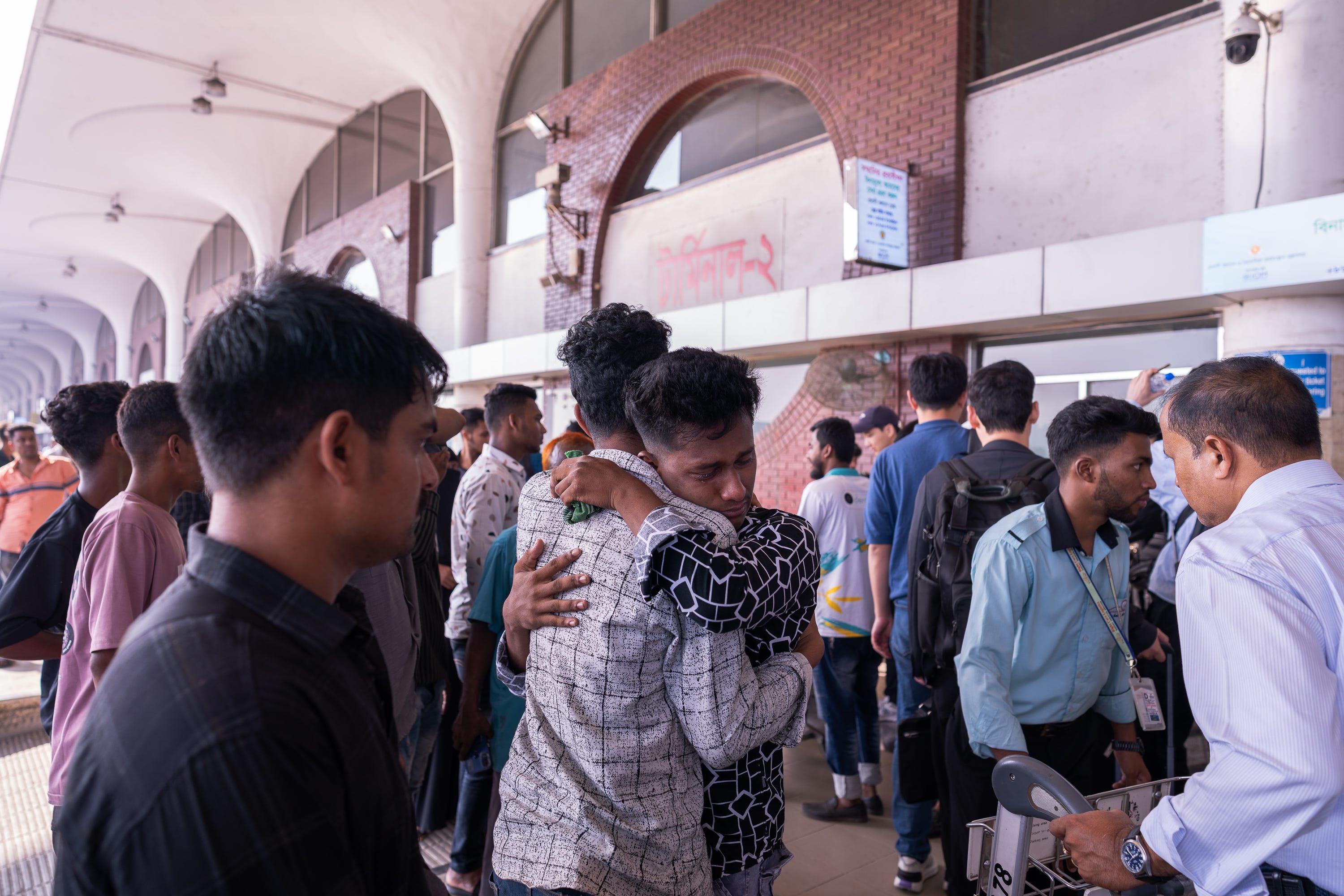
Our car pulls off the expressway as we exit to the airport and we wind our way up the ramp to the departures terminal. The sun is already hot as we get out of the car, but it feels like it will rain. A cyclone has formed off the coast and the air feels thicker now, heavier.
Sajal and Alamgir grab their bags from the trunk and look around at the mass of young men and women all pulling their own suitcases forward, the throngs of teary-eyed families saying goodbye, the wails of a mother, the coughs of a father as he tries to choke down the swelling sadness that shudders his chest.
Hundreds of young men and women, who like them, will propel themselves across the Arabian Sea, all out to stake their claim in the hopes of building something better.


Sajal and Alamgir wheel their bags forward and enter the fray, no longer just two men leaving but entering this much larger procession, millions of migrants whose departures, repeated day after day, have become the country’s central economic rhythm. Their sacrifices feeding entire villages, financing education, anchoring households. Their debts plunging others into years of pain that many never fully escape. Their earnings traveling home in separate streams, one formal, visible, stabilizing the country and the other opaque and secret. A system that simultaneously strengthens the country as it hollows it out.


Sajal and Alamgir present their passports to a security officer and walk through the entrance, instantly becoming silhouettes as they step out of the morning’s bright light and into the building’s shadow. Their flight is at 1:45pm and it’s not even 7:30am.
Behind them, the city continues to churn, all bodies and noise, movement and need, surviving on their sacrifice, feeding on their absence.
This story would not have been possible without the work of Dhaka-based journalist and fixer Shehab Sumon, as well as the support from Saif Hasnat and Mohammed Ali Mazed.
Wow! What a story, and told so vividly.